TL;DR: A reliable nicotine pouch packaging manufacturer should offer FDA food-contact materials, ISO 8317 child-resistant certification, 10,000-piece MOQs, 7–10 day sampling, and full customs documentation. MANKE manufactures empty nicotine pouch packaging only — we do not produce, fill, or sell nicotine pouches — and ships compliant PP and aluminum cans to the US, EU, UK, Australia, and GCC markets.
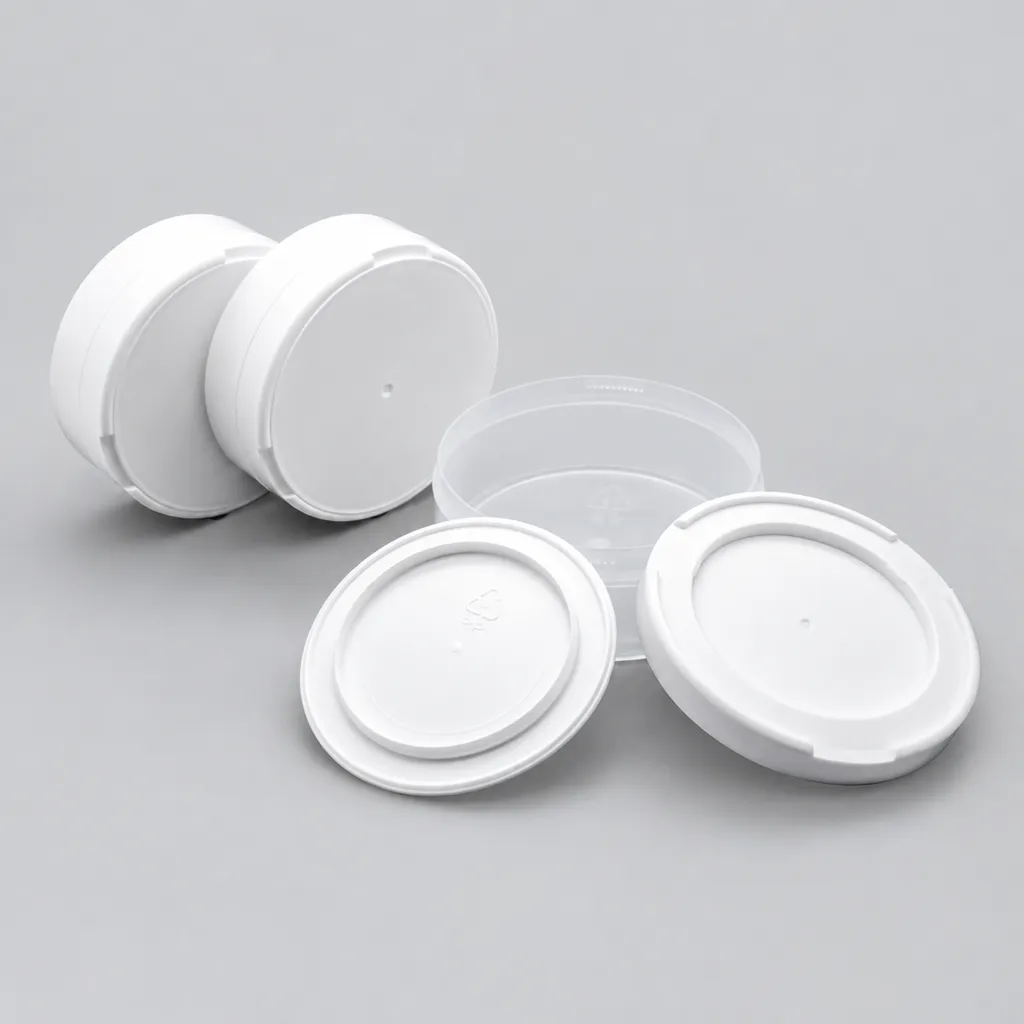
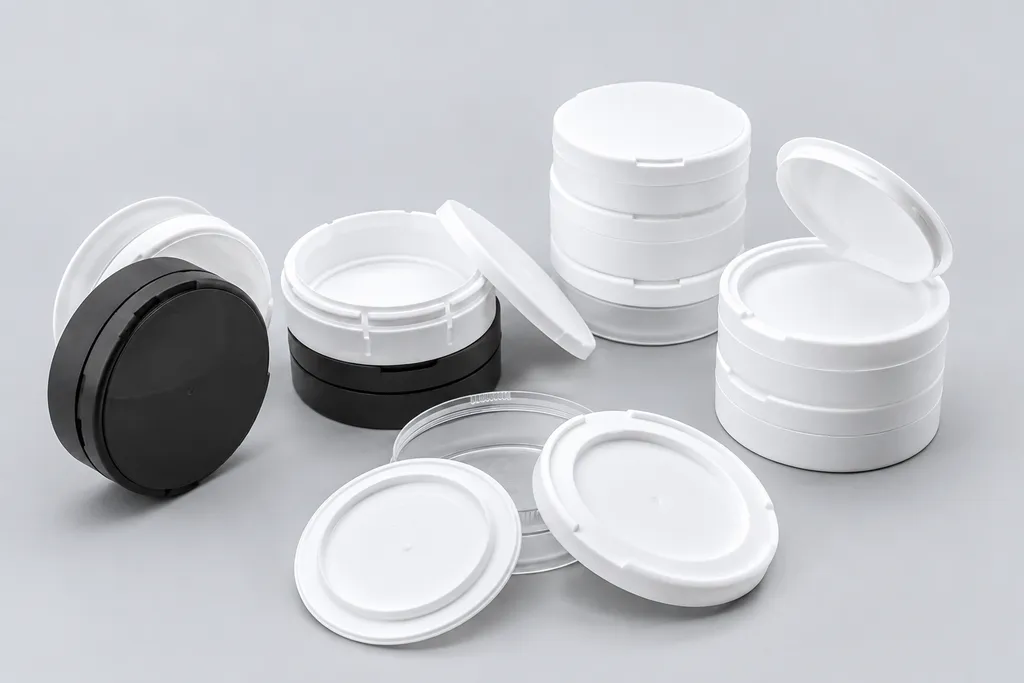
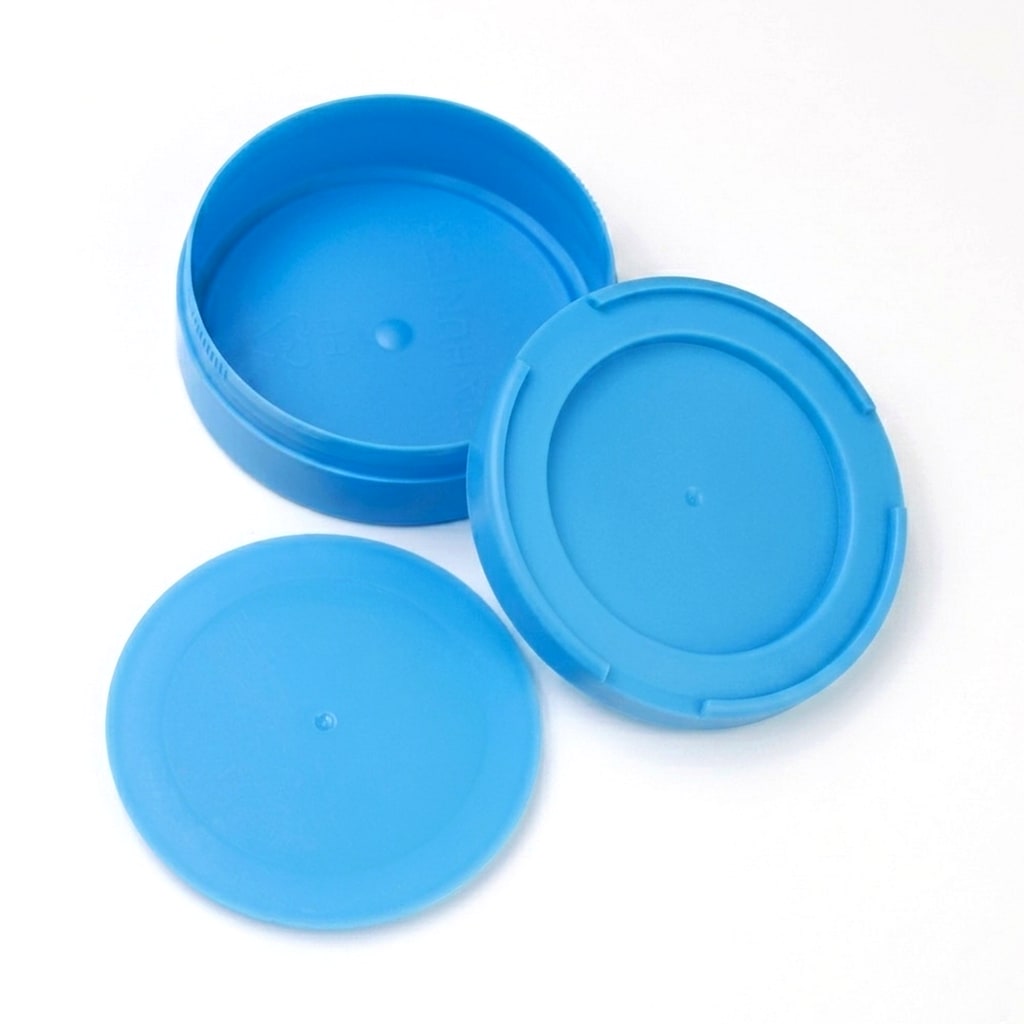
MANKE is a compliance-first OEM packaging manufacturer. The standard and CR cans share the same 70 mm diameter platform, so brands can start with a non-CR SKU for market testing and switch to CR or aluminum later while reducing the need for major filling-line adjustments. Production batches can be supplied with the certificates and test reports typically needed for customs documentation, market review, or retailer onboarding, depending on destination requirements. The checklist below is the same one MANKE’s engineering team uses when buyers ask how to evaluate a new packaging supplier.
What Should You Verify First?
The fastest way to disqualify a weak supplier is to ask for five documents before requesting samples:
- Material compliance — FDA 21 CFR food-contact declaration and EU 10/2011 migration data for PP or aluminum.
- CR test reports — ISO 8317 and, for the US market, 16 CFR 1700.20 reports from an accredited third-party lab.
- MOQ clarity — a realistic entry point, typically 10,000 pcs per SKU for catalog designs.
- Sampling timeline — 7–10 working days for standard PP, with aluminum samples taking longer.
- Logistics support — documented Incoterms and customs paperwork for the destination.
If a supplier cannot provide batch-level CR test reports or material certificates, the supplier is unlikely to be the actual manufacturer.
Why Does the Right Manufacturer Matter?
A packaging failure in a regulated market costs far more than the packaging itself. A can with an identical appearance on a marketplace listing can fail customs inspection if the lid torque is out of spec, the material certificate is missing, or the CR mechanism has not been tested by an accredited lab. The result is delayed shipments, retailer rejection, or a product recall.
A manufacturer using in-house tooling and documented quality systems reduces related risks through controlled processes and traceable production records. Every batch ships with documentation recognized by customs authorities, distributors, and retailers. For nicotine pouch brands, such documentation is not a premium service — the documentation is the baseline for B2B packaging.
How Does MANKE Manufacture Nicotine Pouch Packaging?
MANKE uses the same 70 mm diameter platform for injection-molded PP and CNC-machined aluminum cans, so brands can test one structure and switch to another while reducing the need for major filling-line adjustments. The manufacturing workflow includes:
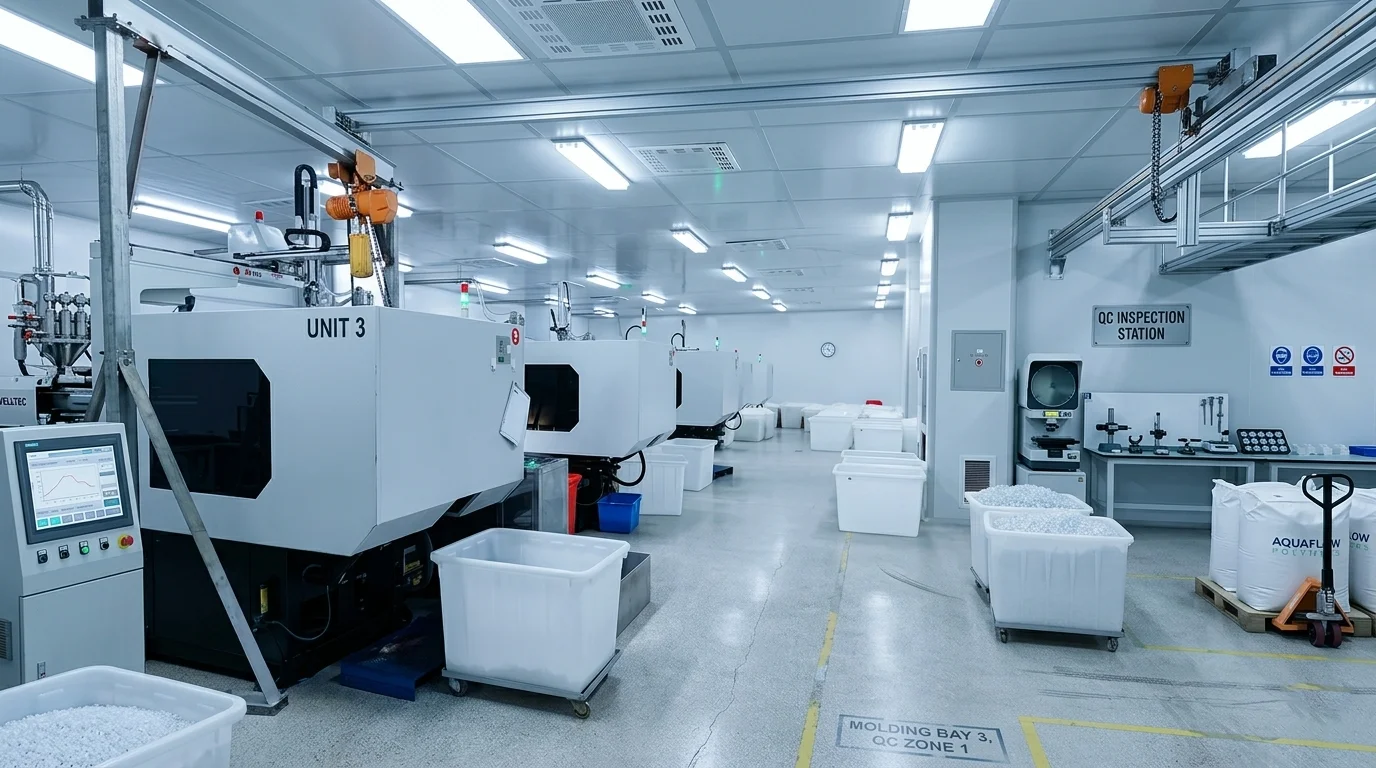
- Injection molding — food-grade PP resin is molded into can bodies and lids with controlled dimensional inspection according to production specifications.
- Quality control — production batches undergo dimensional inspection, closure testing, and visual quality checks according to QC procedures.
- CR testing — for child-resistant orders, opening torque is measured and recorded per batch by an ISO 17025 accredited third-party lab.
- Documentation — every shipment includes FDA food-contact declarations, ISO 8317 certificates for CR SKUs, and batch test reports.
Aluminum cans follow a CNC machining and anodizing process. Custom molds take 4–6 weeks, and NDA protection is standard for buyer-funded tooling.
Which Material Should You Choose: PP Plastic or Aluminum?
PP plastic is the standard choice for cost-sensitive launches and volume SKUs; aluminum is the upgrade path when brand positioning or moisture protection justifies the cost.
| Attribute | PP Plastic | Aluminum |
|---|---|---|
| Best for | Cost-effective launches, multi-SKU testing | Premium positioning, brand differentiation |
| Empty weight | ~12–15 g depending on closure | ~15–25 g depending on wall thickness and finish |
| Moisture barrier | Good moisture resistance | Superior moisture and oxygen barrier |
| MOQ | 10,000 pcs | 10,000 pcs |
| Sampling | 7–10 working days | 14–21 days |
| CR option | Yes — ISO 8317 + 16 CFR 1700.20 | Yes — ISO 8317 + 16 CFR 1700.20 |
Both materials use MANKE’s standard 70 mm platform, so switching from PP to aluminum uses the same 70 mm filling-line setup.
What Compliance Documentation Should You Receive?
Every compliant order should ship with material safety, food-contact, and — for CR SKUs — child-resistant test reports matching the destination market. For each order, MANKE provides:
- FDA 21 CFR food-contact declaration
- EU 10/2011 migration certificates
- REACH compliance statement
- ISO 8317 certificate + per-batch CR test reports for CR orders
- Batch QC report with dimensional data
- Carton and load photos before departure
For GCC markets, GSO ISO 8317 documentation can be arranged. For Australia, market-specific test reports are available on request.
The matrix below maps major markets to the standards most commonly cited for nicotine pouch packaging:
| Market | Regulation | Implication for Packaging |
|---|---|---|
| United States | 16 CFR 1700.20 (PPPA) | CR testing at a CPSC-recognized lab is commonly required for consumer-facing sales. |
| European Union | TPD Article 20 + EN 862 / ISO 8317 | Child-resistant packaging is required or strongly recommended for many nicotine-containing products. |
| United Kingdom | BS EN ISO 8317 | UK-referenced CR packaging commonly follows the BS EN ISO 8317 framework. |
| Canada | SOR/2001-269 / CSA Z76.1 | Regulated consumer products may require CR packaging; confirm category scope. |
| GCC / UAE | GSO ISO 8317 | Gulf markets increasingly reference ISO 8317-based requirements. |
| Australia | TGA / ACCC guidance | CR is mandatory or strongly recommended depending on product classification. |
Because regulations change and national implementations differ, confirm the latest requirement with a local compliance consultant or testing lab before finalizing packaging artwork.
How Do You Compare Manufacturers Side by Side?
Use a four-factor scorecard: compliance proof, manufacturing control, commercial terms, and logistics support.
| Factor | What to Ask | Why the Factor Matters |
|---|---|---|
| Compliance proof | Can you share the latest ISO 8317 / 16 CFR 1700.20 report with lab name and batch number? | Customs and retailers require traceable test reports. |
| Manufacturing control | Do you own the molds? Can you ship lids and bases separately? | In-house tooling protects design IP and supports flexible packing configurations. |
| Commercial terms | What is the MOQ per SKU? Are samples credited against bulk orders? | Clear terms prevent budget surprises and speed pilot launches. |
| Logistics support | Which Incoterms do you support? Do you provide customs paperwork? | DDP or CIF routing can simplify import clearance. |
Manufacturers answering each question with documentation are usually the actual factory. Traders tend to deflect or provide generic certificates.
How Can You Tell a Real Manufacturer from a Trader?
The biggest risk in supplier selection is paying factory prices for trader-level accountability. A real manufacturer can show evidence at each step of the supply chain. Before sending a down payment, verify five things:
- Factory registration — a valid business license matching the factory address on the invoice.
- Production evidence — photos or videos of injection molding lines, CNC machines, or QC stations.
- Tooling ownership — proof the supplier owns or controls the molds, not a third-party partner.
- Batch-level records — QC reports tied to a specific production batch, not generic one-time certificates.
- Traceable test reports — CR reports listing the lab name, test date, batch number, and SKU.
Traders often redirect technical questions, delay sample shipments, or provide certificates not matching the SKU on the report. Manufacturers answer directly because the engineering and production teams are in-house.
MANKE provides a free Supplier Verification Checklist covering all five points, plus payment terms, pilot batch sizing, and after-sales policies.
What Is the Typical Sampling and Production Timeline?
Stock-color samples ship in 7–10 working days, and production orders typically ship 14–18 working days after artwork approval. A well-managed launch path follows the stages below:
| Stage | Quantity | Purpose | Typical Lead Time |
|---|---|---|---|
| Sample | 2–300 pcs | Visual review or filling-line testing | 7–10 working days for PP |
| Pilot | 5,000–20,000 pcs | First market test | 2–3 weeks production |
| Scale | 50,000–500,000 pcs | Full launch with custom decoration | 3–5 weeks production |
| Enterprise | 1M+ pcs | Annual programs | Custom scheduling |
Custom-printed samples add 3–5 days for a small pilot run. Custom mold samples take 4–6 weeks because new tooling must be cut and validated.
How Do You Start with MANKE?
Request samples to evaluate closure feel, seal performance, and line compatibility before committing to a production order. MANKE’s sample workflow is designed to reduce buyer risk:
- Share artwork and specifications — vector artwork, Pantone references, target dimensions, and any reference samples.
- Engineering review — MANKE checks artwork against the chosen can body and flags print-area boundaries or CR compatibility issues.
- Sample production — 2–5 units for visual review or 200–300 units for filling-line testing.
- Sample approval — confirm color, closure feel, label adhesion, and line compatibility.
- Pilot production — move to 5,000–20,000 pcs for market testing.
Most stock-structure sample requests ship within 7–10 working days. Custom-printed or aluminum samples take longer depending on process complexity.
Related Reading
- Nicotine Pouch Packaging Solutions — MANKE’s complete packaging overview and options.
- Nicotine Pouch Can Specifications — exact dimensions, pouch counts, and certifications.
- Custom Nicotine Pouch Packaging — colors, labels, molds, and OEM services.
- Child-Resistant vs Standard Packaging — when CR packaging is required.
- White Label vs Private Label vs OEM — choose the right launch model.
- Browse All Snus Can SKUs — compare standard, CR, and aluminum options.
Get Started with MANKE
Need a manufacturer able to deliver compliant nicotine pouch packaging from day one? Request free samples to evaluate MANKE’s PP and aluminum can options, or ask for a compliance assessment for the target market.