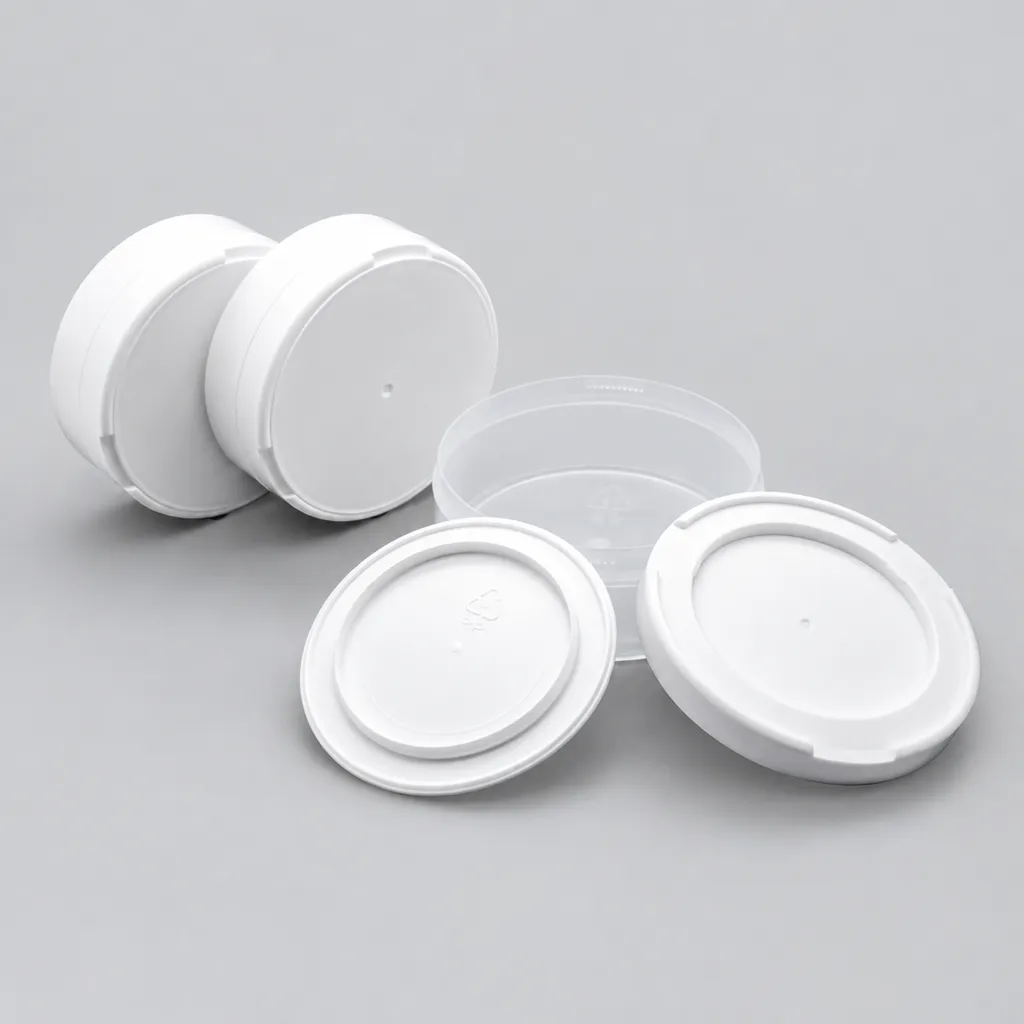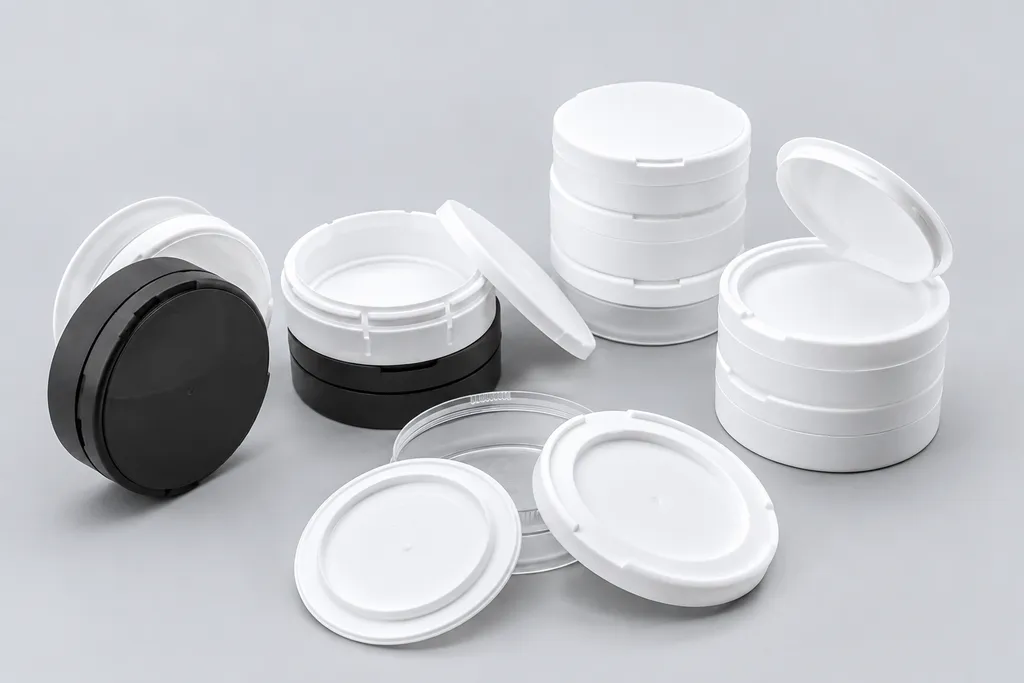
TL;DR: Slim and standard empty cans fall within the two industry-standard dimensional ranges common across nicotine pouch brands: slim-format cans (~70 mm diameter, 19–20 mm height category) and standard-format cans (70 mm diameter, 20–25 mm height category). MANKE produces both formats in food-grade PP plastic and 6061 aluminum, with child-resistant (ISO 8317) and standard closure options. Slim cans hold 15–18 pouches with a CR mechanism; standard cans hold 18–24 pouches. Standard catalog cans start at 5,000 pcs MOQ with samples shipping in 7–10 working days. For brands requiring an exact dimensional match — which varies by generation and market version for all major brands — custom mold development is available with NDA protection. This page is a dimensional reference for procurement teams evaluating empty can formats against known industry standards. MANKE has no official partnership with any nicotine pouch brand — all brand references describe commonly used industry can categories.
What Are the Standard Nicotine Pouch Can Dimensions?
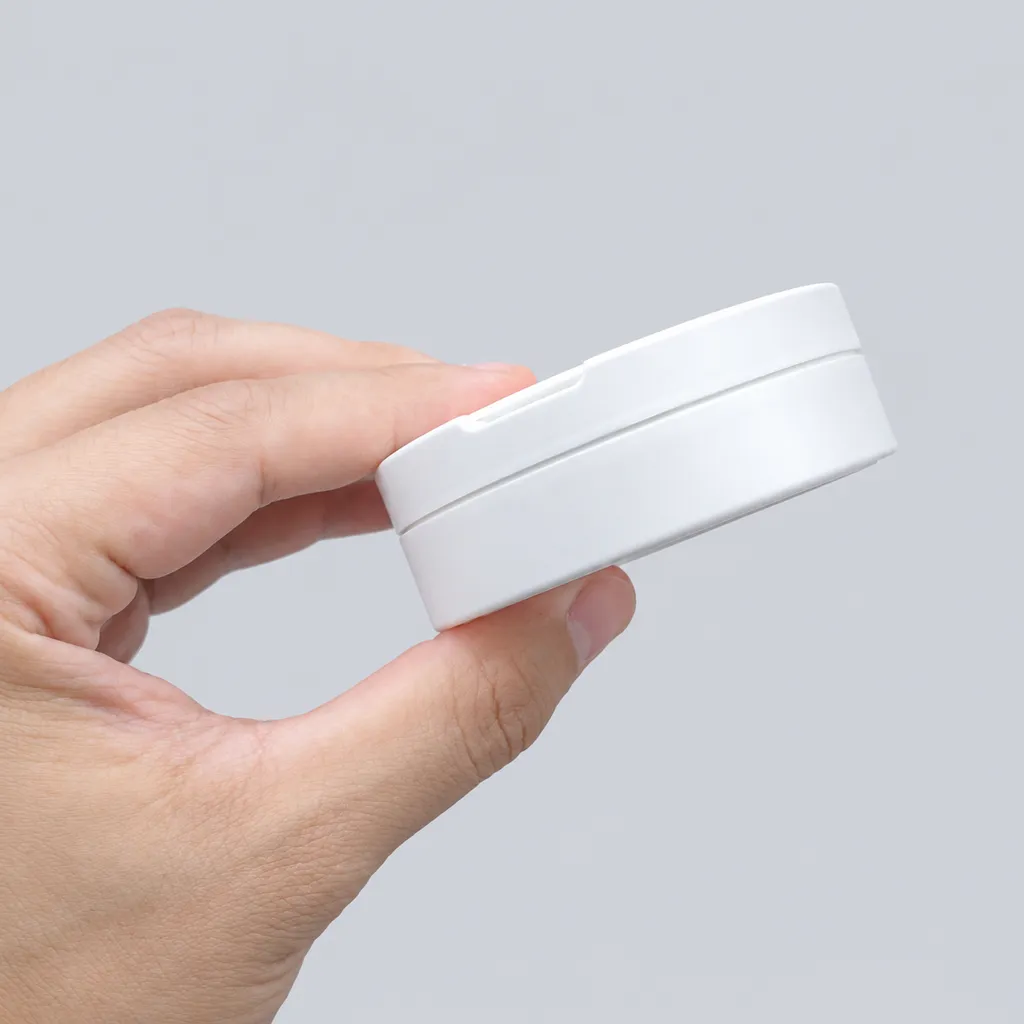
Nicotine pouch cans fall into two primary dimensional families. The slim format and the standard format emerged from different brand design choices, and both are now widely used across the industry.
| Format | Diameter | Height | Typical Capacity | Common Use |
|---|---|---|---|---|
| Slim | 69–71 mm | 16–20 mm | 15–18 pouches (CR) / 18–22 (standard lid) | ZYN, VELO slim variants — pocket-friendly profile |
| Standard | 70–73 mm | 20–25 mm | 18–24 pouches | VELO, Killa, White Fox, Pablo — larger pouch counts |
The 70 mm diameter has become the de facto industry standard because it fits existing filling line tooling, retail display trays, and consumer expectations developed over decades of oral tobacco packaging. Within the 70 mm family, the height differentiates slim from standard — a small dimension change that significantly affects pouch count, pocket profile, and brand positioning.
MANKE’s closest catalog matches:
| MANKE SKU | Format | Diameter | Height | Material | Closure |
|---|---|---|---|---|---|
| MK-SNUS-PP-ROUND | Slim | 69.95 mm | 19.25 mm | PP | Snap-On Lid |
| MK-SNUS-PP-CR-TRIANGLE | Slim CR | 69.8 mm | 20.4 mm | PP | Push-and-Turn CR |
| MK-SNUS-PP-SL | Standard | 70 mm | 25 mm | PP | Snap-Lid |
| MK-SNUS-PP-SNL | Standard | 70 mm | 25 mm | PP | Snap-On Lid |
| MK-SNUS-PP-FT | Standard | 70 mm | 25 mm | PP | Flip-Top |
| MK-SNUS-PP-CR | Standard CR | 70 mm | 20 mm | PP | Push-and-Turn CR |
| MK-SNUS-AL-CR | Standard CR | 70 mm | Custom 20–25 mm | 6061 Aluminum | CNC-machined CR |
For the complete 21-SKU catalog including extended-series options, see the All Snus Cans collection.
How Many Pouches Fit in a Standard Can?
Pouch capacity is determined by three variables: can internal volume, pouch dimensions, and whether a child-resistant mechanism or desiccant insert occupies internal space. CR mechanisms consume 2–5 mm of internal height, reducing usable volume compared to snap-on lid variants with the same external dimensions.
| Can Format | Pouch Size | Without CR | With CR Mechanism |
|---|---|---|---|
| Slim (69–71 mm × 16–20 mm) | Slim/mini (0.5–0.7 g) | 18–22 | 15–18 |
| Slim (69–71 mm × 16–20 mm) | Standard (0.7–1.0 g) | 15–18 | 12–15 |
| Standard (70–73 mm × 20–25 mm) | Slim/mini (0.5–0.7 g) | 22–24 | 18–20 |
| Standard (70–73 mm × 20–25 mm) | Standard (0.7–1.0 g) | 18–22 | 15–18 |
| Standard (70–73 mm × 20–25 mm) | Large (1.0–1.5 g) | 12–16 | 10–14 |
If your brand includes a desiccant insert for moisture control, subtract 2–4 pouches from each estimate. The best way to confirm exact capacity is to request samples and physically load your pouches — MANKE provides 2–5 free samples per SKU for this purpose.
PP Plastic vs Aluminum: Which Material Fits Your Brand Format?
Both materials serve the same dimensional ranges. The choice is about brand positioning, unit economics, and production timeline.
PP plastic cans are injection-molded from food-grade polypropylene compliant with FDA 21 CFR 177.1520 and EU 10/2011. They are the standard choice for most nicotine pouch brands — lighter (12–18 g empty), lower per-unit cost (from $0.084/pc at scale), and faster to sample (7–10 working days). PP accepts matte or glossy surface finishes and full-color decoration through IML, silk-screen, or shrink-sleeve labeling.
6061 aluminum cans offer a heavier, colder tactile experience (15–25 g empty) with anodized surface finishes in chrome, bronze, black, matte black, or custom Pantone colors. Aluminum signals premium positioning and provides superior moisture and oxygen barrier properties. The trade-off: higher per-unit cost (typically 2–4× PP), longer sample lead time (2–3 weeks for anodized finishes), and higher shipping weight.
For a detailed side-by-side comparison including real pricing data and production timelines, see the Aluminum vs Plastic Snus Cans material guide.
Format Compatibility: Industry-Standard Can Formats Used by Major Brands
Important: The format information below describes commonly used dimensional ranges in the nicotine pouch industry. MANKE produces empty packaging cans that fit within these standard ranges. MANKE has no official partnership, licensing agreement, or affiliation with any of the brands mentioned. Brand names are used solely as dimensional format references — they represent the search terms buyers use when sourcing compatible packaging, not an implied relationship. Exact external dimensions vary by generation and market version for all listed brands; the classifications below describe the general can category each brand is commonly associated with.
| Brand | Typical Format | Industry Can Category |
|---|---|---|
| ZYN | Slim format | ~70 mm diameter slim can category |
| VELO | Slim and standard formats | 70 mm class formats |
| Pablo | Standard format | Large 70 mm class can format |
| White Fox | Standard format | Large 70 mm class can format |
| Killa | Standard format | Large 70 mm class can format |
All MANKE standard-format cans (70 mm diameter) are dimensionally compatible with filling lines calibrated for the 70 mm class — the category that encompasses the majority of commonly used nicotine pouch formats. The 25 mm height accommodates standard pouch counts for brands using full-size formats. Slimmer format variants (19–20 mm height range) are available for brands in the slim can category. For brands requiring an exact diameter or height match — for example, matching a specific-generation format from a particular market — MANKE provides custom mold development under NDA with typical 4–6 week tooling lead time. Because brand packaging dimensions can change between product generations and vary by market, the most reliable approach is to share your target can specifications during the RFQ stage — MANKE’s engineering team will confirm compatibility against production samples.
If your filling line requires a specific diameter tolerance, contact MANKE with your equipment specifications — the engineering team can confirm compatibility against production samples before you commit to an order.
What Manufacturing Options Does MANKE Offer for Brand-Compatible Cans?
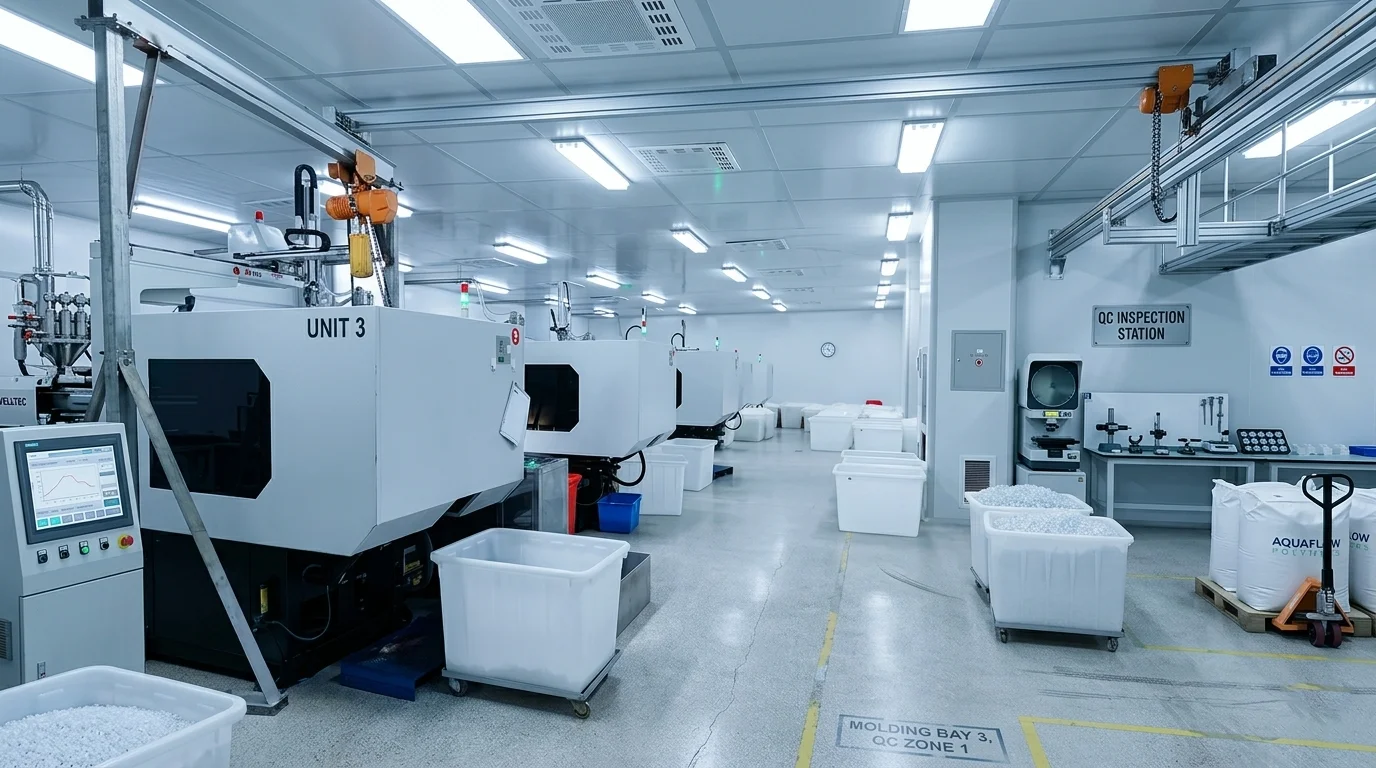
MANKE’s own-factory production covers the full manufacturing chain for both standard-catalog and custom-format cans. Twelve injection molding machines (80–300 ton clamping force, CLAIM-FACTORY-001) with 5M+ annual unit capacity (CLAIM-CAPACITY-001) support production from pilot runs to mass scale.
Injection Molding: Food-grade PP granulate is heated and injected into precision steel molds at controlled temperature and pressure. MANKE’s mold workshop maintains dimensional tolerance within ±0.05 mm across production batches. Standard 70 mm diameter molds are always in production — no tooling wait for catalog dimensions. Custom diameters or heights require new mold fabrication (4–6 weeks, NDA-protected).
Printing and Labeling: Four decoration methods — each compatible with both slim and standard formats:
| Method | Best For | Lead Time Impact | Durability |
|---|---|---|---|
| In-Mold Labeling (IML) | High-volume, photo-quality graphics | No added time (integrated into molding) | Permanent — label fuses into PP during molding |
| Silk-Screen Printing | 1–3 color logos, cost-sensitive runs | +3–5 days on samples | High — wear-resistant ink |
| Shrink-Sleeve Labels | Full-wrap 360° graphics, small batches | +5–7 days | Moderate — replaceable for design updates |
| Embossed/Debossed Logo | Tactile brand mark, no color needed | Built into mold (one-time) | Permanent — part of the mold itself |
Child-Resistant Mechanism: MANKE’s CR cans use a push-and-turn closure tested to ISO 8317 and, for the US market, 16 CFR 1700.20 (CLAIM-010). CR cans ship with bodies and lids packed separately — this is required to maintain certification validity during transit. The CR mechanism is built into the standard 70 mm diameter form factor; external dimensions do not change. Internal usable volume decreases by approximately 2–5 mm in height compared to non-CR variants of the same external size.
Aluminum CNC Machining: For premium aluminum options, 6061 alloy is CNC-machined to specification with anodized surface finishing. Available finishes include chrome-look, bronze-look, black, matte black, and custom Pantone-matched anodizing. Aluminum can production involves a separate workflow from PP injection molding — same factory, same quality system, different production line.
How to Choose the Right Can Dimensions for Your Filling Line
Choosing between slim and standard formats is fundamentally a filling-line compatibility decision, not a brand preference decision. Before committing to a format:
-
Confirm your filling equipment’s can diameter tolerance. Most machinery is calibrated to 70 mm but can accommodate 69–73 mm with minor adjustment. If your co-packer uses a specific can specification, share it with MANKE during the RFQ stage — the engineering team will confirm compatibility.
-
Test pouch count with physical samples. Calculated capacity estimates are useful for budgeting, but actual fit depends on your pouch dimensions, fill density, and whether you include a desiccant. Request 2–5 free samples per SKU and load them with your actual pouches.
-
Decide on child-resistant certification early. A CR mechanism affects internal capacity, per-unit cost, and shipping configuration (bodies and lids separated). If you plan to enter the US market, CR is mandatory under 16 CFR 1700.20. If you may expand to regulated markets later, starting with CR avoids re-tooling.
-
Choose material based on brand stage. PP plastic is the standard launch choice — lower cost, faster samples, proven with 150+ B2B brands (CLAIM-030). Aluminum is best reserved for a premium SKU after market validation, or for brands competing directly in the premium segment from day one.
-
Start with catalog dimensions, customize later. Most first-time brands launch with MANKE’s standard 70 × 25 mm format — it fits the widest range of filling equipment, ships fastest, and has the lowest MOQ (5,000 pcs, CLAIM-022). Custom dimensional adjustments are always available as a second phase once your market requirements are validated.
Need to confirm can dimensions against your filling line specifications? Request free samples with a dimensional spec sheet → — MANKE ships 2–5 sample cans per SKU in 7–10 working days, with a complete dimensional data sheet for your engineering team.
Related guides:
- Empty Snus Can Specifications & Sizes Guide — Complete 21-SKU dimensional reference with weights, capacities, and certification data
- Nicotine Pouch Can Specifications: Dimensions, Capacity & Certifications — General nicotine pouch can specs for procurement
- Aluminum vs Plastic Snus Cans: Material Comparison — Real pricing, MOQ, and lead time comparison by material
- Custom Empty Snus Cans: OEM/ODM Guide — Custom mold development, colors, labels, and OEM services
- Empty Snus Cans: Manufacturer Guide — Full manufacturing overview, ordering process, and pricing tiers