TL;DR: MANKE customizes empty snus cans across five dimensions: color (Pantone matching, same tooling, +3-5 days), printing (6 methods from silk-screen to in-mold labeling), dimensions (custom mold, 4-6 weeks, NDA protected), mechanism (custom CR torque and feedback), and material (PP or aluminum with custom anodized finishes). Customization starts at 10,000 pcs MOQ for color/printing on standard molds, and 20,000-50,000 pcs for new mold projects. All custom projects are NDA-protected — your mold is your IP.
Quick answer: Custom empty snus cans can usually be customized through five paths: color, printing, dimensions, closure mechanism, and material finish. Standard customization starts from 10,000 pcs. New mold projects typically require higher MOQ and tooling investment.
For the complete empty snus can overview, see the Empty Snus Cans: Manufacturer Guide. For CR-specific requirements, see Child-Resistant Snus Cans: Procurement Guide. For private-label launch models, see White Label vs Private Label vs OEM.
What Can You Customize on an Empty Snus Can?
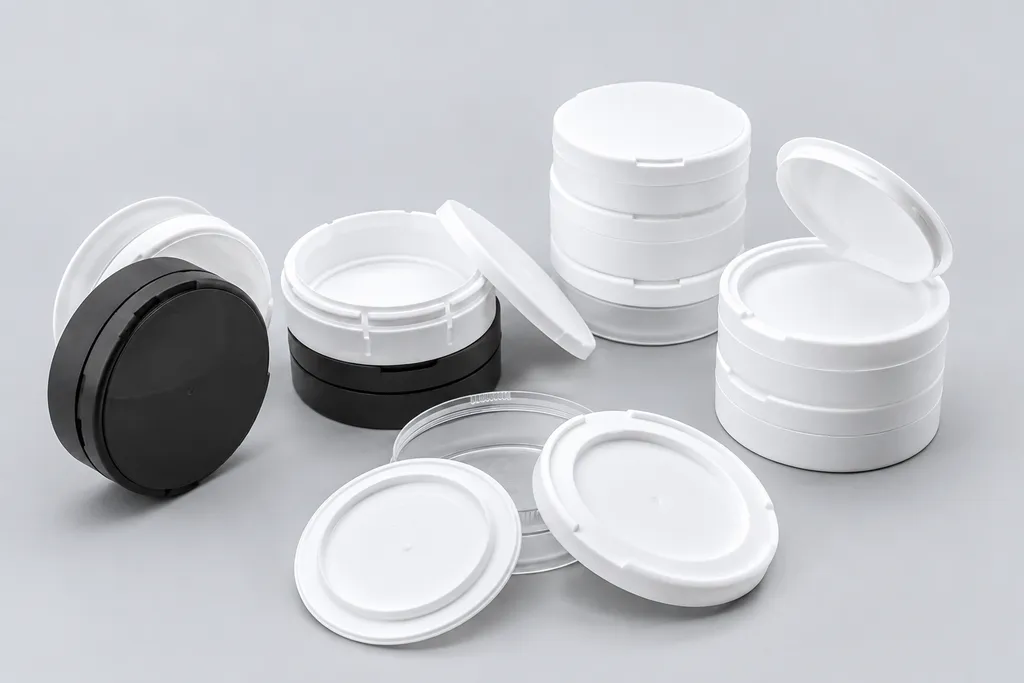
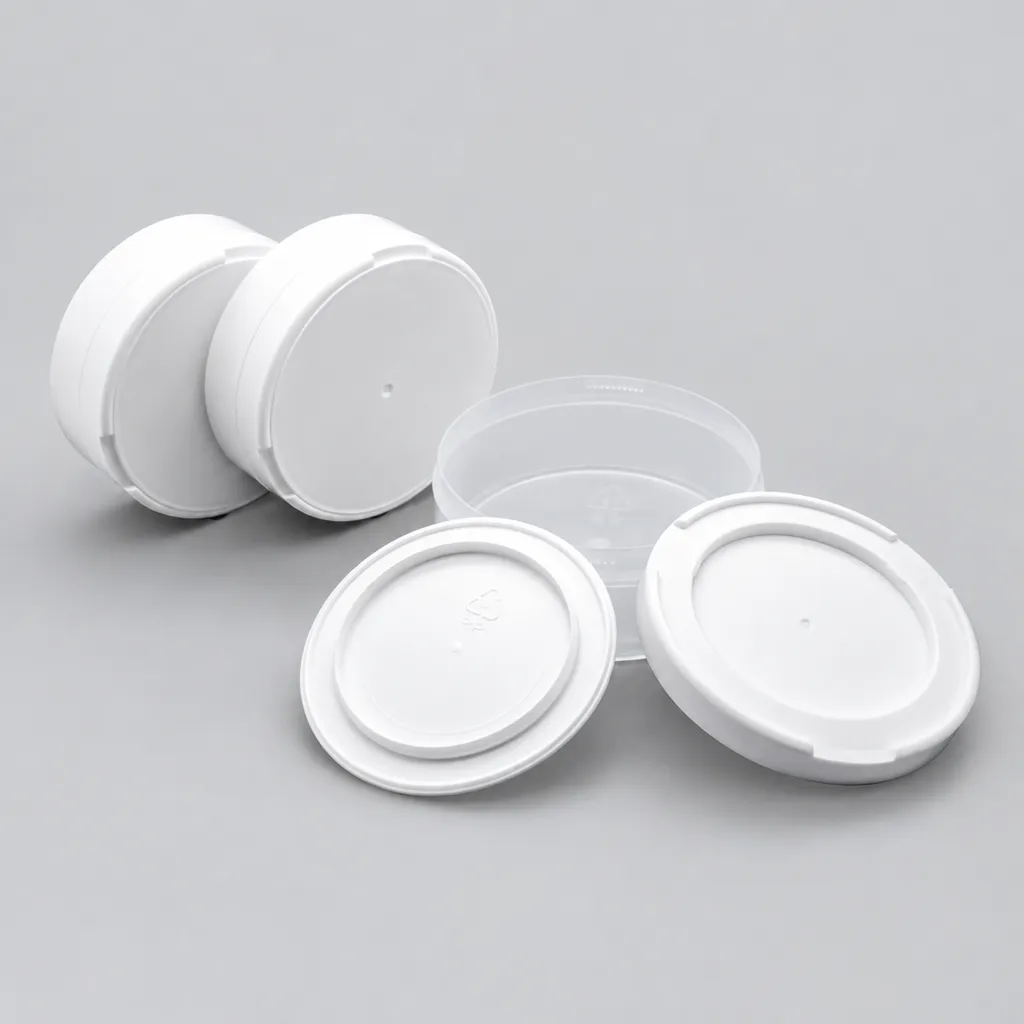
Every physical attribute of a MANKE snus can is customizable. The question is how deep you want to go — from a simple color change (adds 3-5 days) to a fully custom mold (adds 4-6 weeks).
| Customization Layer | What Changes | Timeline Impact | MOQ Impact | Best For |
|---|---|---|---|---|
| Color | Pantone-matched PP resin or anodized aluminum finish | +3-5 days on samples | None (same as stock: 10K) | Brand color matching |
| Printing/Decoration | Logo, graphics, text applied to can surface | +3-5 days on samples | None (10K) | Brand identity on standard molds |
| Dimensions | Diameter, height, wall thickness, internal volume | +4-6 weeks (new mold) | 20K-50K | Unique form factors |
| Closure Mechanism | CR torque, opening type, feedback design | +4-6 weeks (new mold + testing) | 20K-50K | Differentiated user experience |
| Material + Surface | PP vs aluminum, anodized finish type, texture | +0 to 3 weeks (depends on material) | 10K (PP) / project-based (AL) | Premium or sustainability positioning |
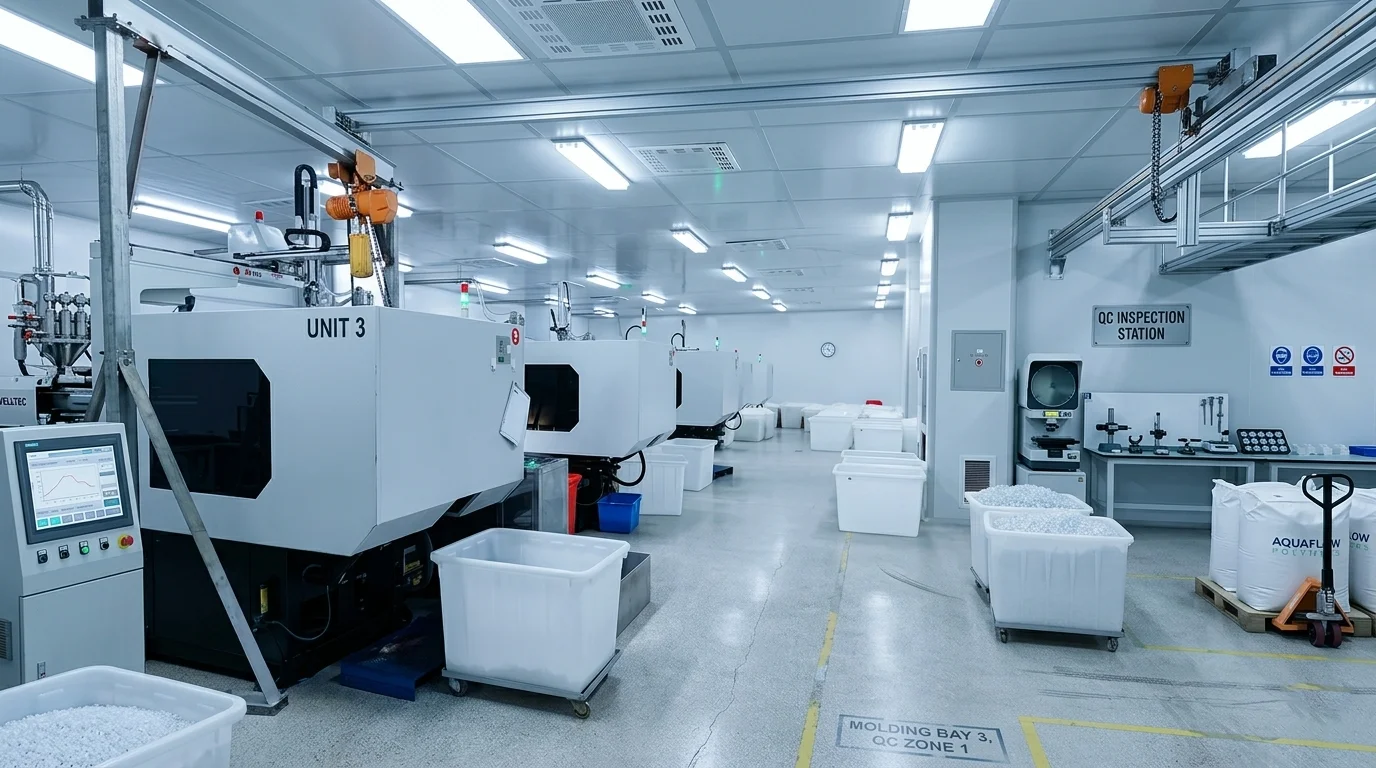
Each layer stacks independently — you can combine custom color + custom printing on a standard mold and no additional tooling time. Or you can go full-custom: new dimensions, new mechanism, custom anodized aluminum finish. MANKE handles both paths from the same production facility.
Which Customization Path Fits Your Project?
| Your Goal | Recommended Path | Typical Timeline | Typical MOQ |
|---|---|---|---|
| Test a brand identity | Pantone color + silk-screen logo | 2-3 weeks to samples | 10,000 pcs |
| Retail launch with durable graphics | IML or shrink-sleeve label | 3-4 weeks to samples | 10,000 pcs |
| Premium line | Aluminum anodizing + laser engraving | 4-6 weeks to samples | Project-based |
| Unique can shape | Custom mold development | 6-10 weeks to production | 20,000-50,000 pcs |
| Regulated markets (US/EU/Canada) | CR customization on certified base | 8-10 weeks to production | 20,000-50,000 pcs |
How Does Custom Color Work on Standard Molds?
Custom color is the most common customization — and the fastest. Because the colorant is mixed into the PP resin before injection molding, the tooling does not change. The result:
- No new mold required — same steel mold, different resin color
- Certification typically unaffected — for the same certified container design, color changes usually do not require redesign of the CR mechanism. Certification requirements should be reviewed whenever the container structure or closure design changes.
- Sample timeline: 10-15 working days (vs 7-10 for standard white)
How the process works:
- You provide a Pantone code (e.g., PMS 186 C for a bold red)
- MANKE formulates the PP resin masterbatch to match
- A small sample batch is molded and shipped to you for approval
- You confirm the color under your brand’s lighting conditions
- Full production proceeds using the approved masterbatch
What to watch for:
- Metallic or fluorescent Pantone colors may require a second iteration to dial in
- PP has a natural slight translucency — opaque colors need higher pigment loading
- Color perception shifts under different lighting (retail vs daylight vs office) — always check samples in your target retail environment
A UK nicotine pouch brand evaluating both plastic and aluminum cans ordered custom Pantone samples of both materials in the same color to compare how the finish translated across PP and anodized aluminum. MANKE shipped both within 14 days under one NDA.
Which Printing Method Should You Choose?
Once the can body exists, you can add branding through six decoration methods. Each has different cost, durability, and visual characteristics.
Note: All pricing ranges below are indicative and depend on artwork complexity, order volume, material, and decoration method. Final pricing is confirmed in the project quote.
| Method | Process | Colors | Durability | Cost per Piece (100K) | Best For |
|---|---|---|---|---|---|
| Silk-Screen Printing | Ink pushed through mesh screen onto can surface | 1-4 spot colors | Good — resists handling wear | $0.005-0.015 | Simple logos, text, regulatory marks |
| Hot-Stamping | Heated die presses metallic foil onto surface | Metallic foil (gold, silver, copper, holographic) | Very good — foil bonds to PP | $0.01-0.03 | Premium logo accents, limited edition runs |
| In-Mold Labeling (IML) | Pre-printed label placed in mold before injection — fuses with plastic | Full color, photo-quality | Excellent — label is part of the can | $0.02-0.05 | Photo-realistic graphics, maximum durability |
| Shrink Sleeve | Pre-printed PVC/PETG sleeve shrunk onto can using heat | Full color, 360° coverage | Good — covers entire surface | $0.01-0.04 | Complex wraparound designs, full coverage |
| Laser Engraving | Laser etches surface — no ink | Monochrome (material-dependent) | Permanent — no ink to wear off | $0.01-0.03 | Aluminum cans, minimalist branding, serial numbers |
| Pad Printing | Silicone pad transfers ink from etched plate to curved surface | 1-2 spot colors | Good — designed for curved surfaces | $0.005-0.01 | Small logos on can lid or curved edge |
How to choose:
- Launching a new brand? Start with silk-screen — low cost, fast setup, sufficient quality for market validation.
- Scaling to retail? Upgrade to IML — the label becomes part of the plastic. Cannot scratch off, cannot peel.
- Aluminum premium line? Combine laser engraving with anodized finish for a no-ink, permanent brand mark.
- Limited edition? Hot-stamp a metallic logo on a matte black can.
When Do You Need a Custom Mold?
When standard 70mm × 25mm does not match your product — or when you need a unique closure mechanism — custom mold development is the path.
The Process:
| Phase | Duration | What Happens |
|---|---|---|
| Design Review | 3-5 days | MANKE engineers review your CAD/requirements. Feasibility assessment. DFM feedback. |
| NDA Execution | 1-2 days | Mutual NDA signed. Your IP is protected before any technical discussion begins. |
| Mold Design | 1-2 weeks | Steel mold designed to your dimensions + mechanism spec. 3D model shared for approval. |
| Mold Fabrication | 2-4 weeks | CNC machining of mold steel. Multi-cavity design for production efficiency. |
| First Samples (T0) | 7-10 days | Initial samples from the new mold. Dimensional verification + functional testing. |
| Sample Approval | 3-5 days | You review T0 samples. Adjustments if needed (T1 samples +1 week). |
| CR Testing (if applicable) | 2-4 weeks | ISO 8317 panel testing at ISO 17025 accredited lab. Parallel to your sample review. |
| Production Ramp | 15-28 days | First production run including full QC and documentation. |
Total: 6-10 weeks from design to first production, depending on complexity and CR requirements.
What you own:
- The mold is your property. MANKE stores and maintains the mold but does not use the mold for other clients.
- CAD files and engineering drawings remain confidential.
- If you ever switch suppliers, MANKE will ship your mold to your new manufacturer.
Common custom mold scenarios:
| Scenario | Typical Timeline | Typical MOQ |
|---|---|---|
| Custom height only (keep 70mm diameter, change 15→35mm height) | 5-7 weeks | 20,000 pcs |
| Custom diameter (59mm, 73mm, 80mm) | 6-8 weeks | 30,000 pcs |
| Custom closure mechanism | 6-10 weeks | 30,000-50,000 pcs |
| Full custom (dimensions + closure + surface) | 8-10 weeks | 50,000+ pcs |
How Can You Customize the CR Mechanism?
Child-resistant mechanisms can be customized beyond the standard push-and-turn torque. The goal is a differentiated user experience while maintaining ISO 8317 compliance.
Customizable CR parameters:
| Parameter | Standard | Custom Range | Impact |
|---|---|---|---|
| Opening Torque | 0.5-1.0 N·m | 0.3-1.5 N·m | Higher = harder to open (more child-resistant, potentially less convenient for elderly users). Must still pass required ISO 8317 adult and child panel testing. |
| Mechanism Type | Rotate-open or push-and-turn | Custom multi-step sequence | More steps = higher child resistance, but must remain intuitive for adults. |
| Feedback Design | Click sound + tactile bump | Custom sound profile, textured grip indicators, visual alignment marks | Branded unboxing experience. Arrow/glyph design is brandable. |
| Grip Texture | Smooth with standard knurling | Custom knurling pattern, rubberized overmold | Easier grip for elderly users, premium tactile feel. |
Critical constraint: Any custom CR mechanism must pass ISO 8317 panel testing before production. MANKE coordinates testing at an ISO 17025 accredited third-party lab. Budget 2-4 weeks and $2,000-5,000 for lab testing, depending on laboratory, test scope, and market requirements.
A Canadian nicotine pouch brand ordering PP Plastic Snus Can — Child-Resistant (MK-SNUS-PP-CR) specified their preferred opening torque after testing samples with their target demographic (25-45 year old males). MANKE dialed in the torque to the spec and included per-batch torque measurement in the standard documentation package.
How Does MANKE Protect Your Design IP?
Every custom project starts with an NDA. MANKE signs before receiving any technical information.
What the NDA covers:
- CAD files and 3D models
- Engineering drawings and specifications
- Pantone color formulations specific to your brand
- Custom mold designs
- Production volume and pricing agreements
- Client identity and market strategy
What happens to your mold:
- You own the mold. Period.
- MANKE stores, maintains, and insures the mold in our facility.
- The mold is never used for another client — not even for “similar” projects.
- If you switch suppliers, MANKE ships your mold to your new manufacturer within 30 days of written request.
- Mold storage is free while you have an active production relationship. After 12 months of inactivity, a small storage fee applies (communicated in advance).
What Cannot Be Customized?
Not every attribute is negotiable. Some constraints protect compliance, safety, or material integrity:
| Element | Why the Element Is Fixed | What You Can Do Instead |
|---|---|---|
| Regulatory markings | Market-specific warnings (e.g., nicotine concentration, health warnings) are required by law | Use compliant label artwork; MANKE provides regulatory layout guides |
| CR compliance threshold | ISO 8317 child-panel pass/fail criteria are defined by the standard | Adjust torque, texture, or mechanism sequence within the standard |
| Food-contact material base | PP resin must meet FDA 21 CFR / EU 10/2011 requirements | Select colorants and additives approved for food-contact use |
| Minimum wall thickness | Too thin walls fail impact or seal tests | Work with MANKE engineers to optimize wall thickness for your design |
What Do Customization Costs Look Like?
Customization costs fall into two categories: one-time (mold/tooling) and per-piece (color/printing/decoration).
Note: All figures below are indicative ranges based on comparable MANKE projects. Final costs depend on artwork complexity, material, tooling, and order volume.
One-Time Costs
| Item | Cost Range | Notes |
|---|---|---|
| Custom Color Masterbatch | $200-500 | One-time formulation fee. Reusable for all future orders of the same color. |
| Custom Mold (simple) | $2,000-5,000 | Height change only, keeps 70mm diameter. |
| Custom Mold (complex) | $5,000-15,000 | New dimensions, custom mechanism, or multi-cavity. |
| CR Testing (ISO 8317) | $2,000-5,000 | Required for any custom CR mechanism. Included in mold development if CR is part of the design. |
Per-Piece Costs (on top of base can price)
| Decoration | Cost/Piece (10K) | Cost/Piece (100K) | Cost/Piece (500K+) |
|---|---|---|---|
| Custom Color (Pantone) | +$0.005-0.01 | +$0.003-0.008 | +$0.002-0.005 |
| Silk-Screen (1-2 colors) | +$0.015-0.02 | +$0.008-0.015 | +$0.005-0.01 |
| Hot-Stamping | +$0.02-0.03 | +$0.015-0.025 | +$0.01-0.02 |
| IML (In-Mold Label) | +$0.04-0.06 | +$0.03-0.05 | +$0.02-0.04 |
| Shrink Sleeve | +$0.03-0.05 | +$0.02-0.04 | +$0.01-0.03 |
Example: Fully custom can at 100K volume
- Base can (Snap-Lid, MK-SNUS-PP-SL): $0.091/pc
- Custom Pantone color: +$0.005/pc
- IML decoration: +$0.04/pc
- One-time color masterbatch: $300
- Total per piece: ~$0.136 (plus one-time $300)
- Total order: ~$13,900
How Do You Start a Custom Snus Can Project?
Step 1: Define Your Customization Scope
Before contacting MANKE, decide which layers you need:
- Custom color only → fastest path (2-3 weeks to samples)
- Custom color + printing → standard path (3-4 weeks to samples)
- Custom dimensions → mold path (6-10 weeks to production)
- Custom CR mechanism → CR development path (8-10 weeks to production)
Step 2: Send Your Requirements
Provide your Pantone code(s), logo/artwork files (AI or PDF, vector format), rough dimensions if non-standard, and target volume and market. Include any reference images of cans you like.
Step 3: NDA + Design Review
MANKE returns a signed NDA within 24 hours, then engineers review your requirements for feasibility and provide a timeline and quote.
Step 4: Sample Approval
You receive physical samples in your custom color/finish. Approve them under your real-world conditions (retail lighting, containing your actual pouches inside). One revision cycle is included; additional revisions may add 1-2 weeks.
Step 5: Production
Once samples are approved, production proceeds on the agreed timeline. You receive per-batch QC documentation, photos, and (for CR projects) ISO 8317 test reports.
Ready to customize your snus cans? Start your custom project → and include your Pantone code or design brief. MANKE returns a signed NDA + quote within 24 hours. Or request free standard samples first to evaluate baseline quality before customizing.
Related guides:
- Empty Snus Cans: Manufacturer Guide — Full product overview and ordering workflow
- Empty Snus Can Specifications & Sizes Guide — Standard dimensions before customization
- How to Choose Empty Plastic Snus Cans — Which variant to start with
- Child-Resistant Snus Cans: Procurement Guide — CR certification deep-dive
- Nicotine Pouch Packaging USA Compliance — FDA, CPSC, and PMTA requirements
- White Label vs Private Label vs OEM — Choose the right launch model