TL;DR: Most snus and nicotine pouch cans are built on one footprint: Ø70 × 25 mm in food-grade PP. And most requests for custom snus can dimensions quietly resolve into that standard once the actual pouch format is measured — the standard already covers the dominant pouch configurations on the market, and small height variations handle most of the rest. A genuinely non-standard dimension earns its tooling investment only under specific conditions: the pouch format physically does not fit the 70 mm footprint, the capacity target exceeds what standard heights can hold, the product strategy requires a structurally different format rather than a visual one, and expected volume can amortize the tooling across the product’s life. The decision sequence matters more than the decision itself: measure the pouch first, map it to the closest standard can, validate real capacity with physical samples, and only then evaluate custom tooling. Brands that skip the mapping step risk paying tooling costs for a size the catalog already offered. This guide covers the four decision factors, what custom tooling actually commits a buyer to, and how to validate a dimension before any steel is cut.
Custom snus can dimensions become a question the moment a pouch format meets a catalog. A brand has a pouch — or a pouch concept — and needs to know whether a standard can holds the pouch at the target count, or whether the project requires a size that does not exist yet. Get the answer wrong in one direction and the brand pays for tooling the project never needed; get the answer wrong in the other direction and a product launches in a can that holds fewer pouches than the label implies.
This guide covers the container only. MANKE manufactures empty cans and packaging, not filled nicotine products — the pouch format is the buyer’s input, and every section below starts from the pouch format.
Why Do Buyers Ask About Custom Snus Can Dimensions?
Two forces push dimension questions into procurement conversations, and neither is about novelty. The first is structural: the industry’s standard size is not obvious from the outside. The second is evolutionary: pouch formats keep changing underneath the catalog.
Recent buyer inquiries have shown recurring questions around non-standard dimensions, indicating that packaging teams may need earlier evaluation of size requirements. First-time buyers sometimes submit dimension ranges — a span of millimeters rather than a single target — because no public reference makes the industry standard visible before the first supplier conversation. In MANKE’s own inquiry experience, a share of these requests resolve without any custom work: once the buyer measures the actual pouch against the standard can, the standard fits. This pattern is based on a limited sample of inbound inquiries and may not hold across all buyer segments.
The second force is genuine format change. At the category level, some newer pouch formats are increasing internal capacity requirements — a limited observation from current market sources rather than a universal trend, but enough to keep “how many pouches does this can really hold” a live question. Sea freight to the United States or Europe adds weeks between filling and shelf, which makes capacity and fit decisions harder to correct after the fact.
What Does the Ø70 × 25 mm Standard Already Cover?
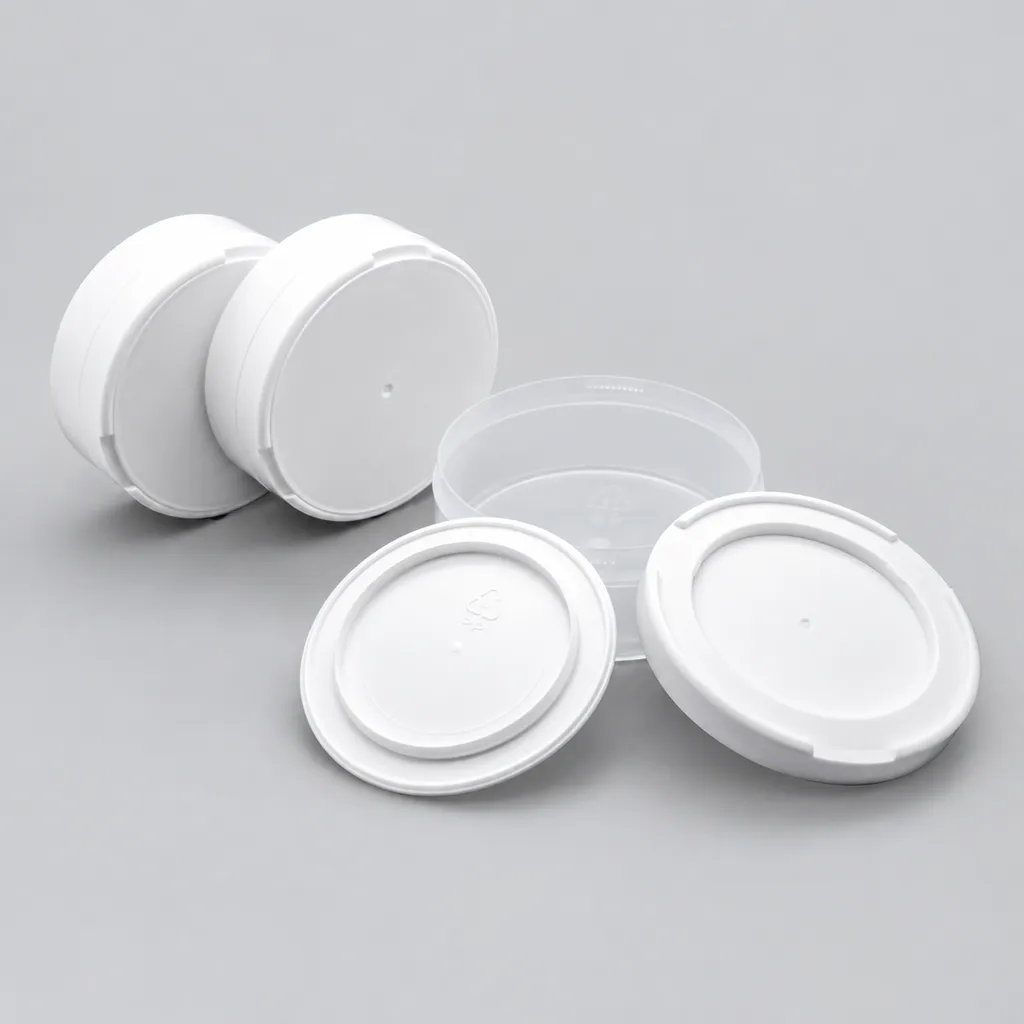
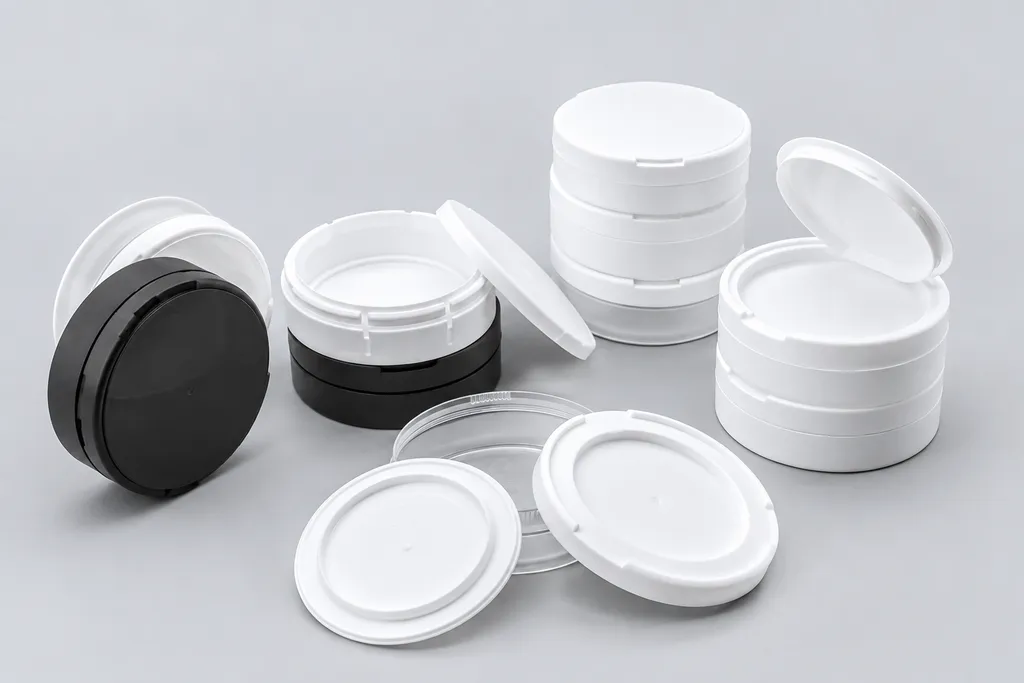
More than most buyers expect. The standard body — Ø70 × 25 mm in food-grade PP, roughly 12 grams, with snap-lid, snap-on, flip-top, and child-resistant closure options on the same footprint — covers the dominant pouch formats in the US and European markets. Height variations within the 70 mm diameter, typically between 22 and 25 mm, absorb most regional preferences without any new tooling.
Two coverage facts matter for the custom-versus-standard decision. First, child-resistant cans share the same external footprint as standard cans; the mechanism reduces internal capacity rather than changing the body’s dimensions. Second, a meaningful share of “non-standard” requests turn out to sit inside the existing variation range once measured — a few millimeters of height is a production variant, not a custom mold.
For the full specifications table — weights, closure types, materials, and capacity references by SKU — see the standard snus can specifications and sizes guide. This article starts where that guide ends: the moment the catalog genuinely cannot answer the requirement.
When Is a Non-Standard Size Actually Worth It?
A non-standard dimension is worth the investment only when the standard has become a constraint — not when the standard is merely unfamiliar. Four decision factors separate real constraints from assumptions:
| Decision factor | The buyer’s real question | When the standard still wins |
|---|---|---|
| Pouch format / fill requirement | Does no catalog can hold the actual pouch at the target count? | The Ø70 × 25 mm standard covers the dominant pouch formats — measure before assuming |
| Capacity target | Does the product plan need a pouch count no standard height reaches? | Small count differences rarely justify tooling; a height variant may already exist |
| Product positioning | Does the format strategy require a structurally different can? | Visual differentiation — color, graphics, surface finish — is a separate customization track, not a dimension decision |
| Long-term volume expectation | Will lifetime volume amortize the tooling investment? | Test-stage volumes should validate on standard sizes first |
Read the table from the right column first. If the standard still wins on every row, the dimension question is answered — and the budget just saved can go toward broader customization options that buyers actually see, such as decoration and labeling. The correct framing is not “when should we customize” but “when has the standard become the limiting factor” — a constraint that measurement, not preference, identifies.
One adjacent case deserves a neutral mention: buyers comparing the two existing slim and standard can formats already on the market can find that comparison in the slim vs standard can guide. That is a choice between two existing formats; this article concerns creating one that does not exist.
What Does Custom Tooling Actually Commit You To?
Three commitments, and only one of them is money. Understanding all three is what turns “custom size” from an idea into a decision.
Capital, amortized. Tooling is a fixed cost recovered across every unit produced. At high lifetime volume, the per-unit tooling burden nearly disappears; at low volume, the tooling burden dominates unit economics. The amortization math is why no responsible manufacturer publishes a single tooling price — the figure is configuration-specific, and the meaningful question is always “over how many units will the tooling cost be spread?” A realistic annual volume estimate is the input that makes the amortization answerable.
MOQ. Custom-dimension projects carry minimum order quantities in the same general range as standard programs — typically 5,000–10,000 pcs, though MOQ varies by SKU and configuration. The difference is commitment depth: a standard-size trial order can be a one-off, while a custom run creates a mold that only repeat volume justifies.
Time. Standard production lead time runs 3–4 weeks from artwork approval. A custom-dimension project adds stages before that clock starts: design confirmation, tooling fabrication, and sample validation. Brands working toward a fixed launch window should count backward from the launch date, not forward from the tooling decision.
What this section deliberately leaves out is the manufacturing engineering itself — mold structure, wall thickness, process control, and tolerance management across a production run. That factory-side view is a separate topic, covered in the injection molded snus cans engineering guide; the buyer-side variables above are the ones that decide whether the engineering conversation should happen at all. For the current scope of custom programs, see the custom OEM can program.
How Do You Validate a Dimension Decision Before Committing?
With physical samples — never with drawings alone. Every capacity figure in this article is approximate for a structural reason: internal structures change usable space. A child-resistant mechanism occupies internal volume, so a CR can of given external dimensions holds fewer pouches than its standard-lid equivalent, and wall structure affects the real count further. Capacity for any configuration must be validated with physical filled samples of the final design, not inferred from specifications.
The validation sequence is five steps, and the order is the protection:
- Measure the pouch. Real dimensions of the actual format, not the nominal ones from a brief.
- Map to the closest standard can. Most journeys end here.
- Sample the standard can. Fill the sample can with real pouches; check count, closure fit, and headspace.
- Sample the nearest variant. If the standard misses, test a height or closure variant before any custom discussion.
- Decide on evidence. Custom tooling enters the conversation only when physical samples prove the existing range cannot work.
Buyers in the Nordics, where portion formats differ from US defaults, run the same sequence — the inputs change, the order does not.
When Does It Make Sense to Talk to a Can Manufacturer?
Once the packaging requirements, dimensions, validation goals, and expected production volume are defined, manufacturers can help evaluate feasibility. An OEM packaging partner can support that evaluation by mapping the requirement against existing tooling, identifying which variations avoid new molds entirely, and flagging where a custom dimension is genuinely the only path. MANKE works this sequence from the standard catalog first — which is why a consultation starts with four inputs rather than a quotation:
| Input to prepare | Why the input matters |
|---|---|
| Pouch format and measured dimensions | Determines whether the 70 mm footprint fits at all |
| Target pouch count per can | Defines the capacity requirement the height must meet |
| Realistic annual volume estimate | Decides whether tooling amortizes across the product’s life |
| Target markets and compliance needs | Shapes closure and documentation requirements on the same body |
With these four inputs, a dimension evaluation takes days rather than weeks of clarification rounds — and its first answer is often a standard can the buyer had not measured against. If your project is approaching this decision point, request a dimension consultation with the four inputs above, or start by browsing the standard can catalog to check what already exists.
Author
MANKE Product Engineering Team. This guide reflects MANKE’s work developing PP and aluminum nicotine pouch cans, dimension and tooling evaluation, and OEM sampling programs for regulated markets. MANKE manufactures empty cans and packaging only.
Sources & Claims
This article separates verified product information, industry context, and claims that require buyer-side verification. It does not:
- Publish tooling price figures, because valid tooling costs are configuration-specific — diameter, structure, and cavitation all shift the number. Tooling evaluation is provided through the RFQ process against real project inputs.
- State exact pouch capacities, because internal structures such as child-resistant mechanisms change usable space. All capacity figures are approximate and require validation with physical filled samples.
- Present the capacity-trend observation as settled: the observation derives from limited market sources and is framed with that limitation.
MOQ and lead-time figures are typical ranges that vary by SKU and configuration; production lead time is counted from artwork approval. Standard dimensions reflect MANKE product specifications. Buyer inquiry patterns are anonymized and aggregated from a limited inbound sample; no customer names or identifiable project details appear.
Related Reading
- Empty Snus Can Specifications: Sizes & Materials Guide — the standard dimension catalog this article deliberately does not repeat
- Custom Nicotine Pouch Packaging: Colors, Labels, Molds & OEM — the broader customization track: decoration, labeling, and program models
- Slim vs Standard Empty Nicotine Pouch Cans — choosing between two existing formats
- Standard can catalog · Custom OEM can program