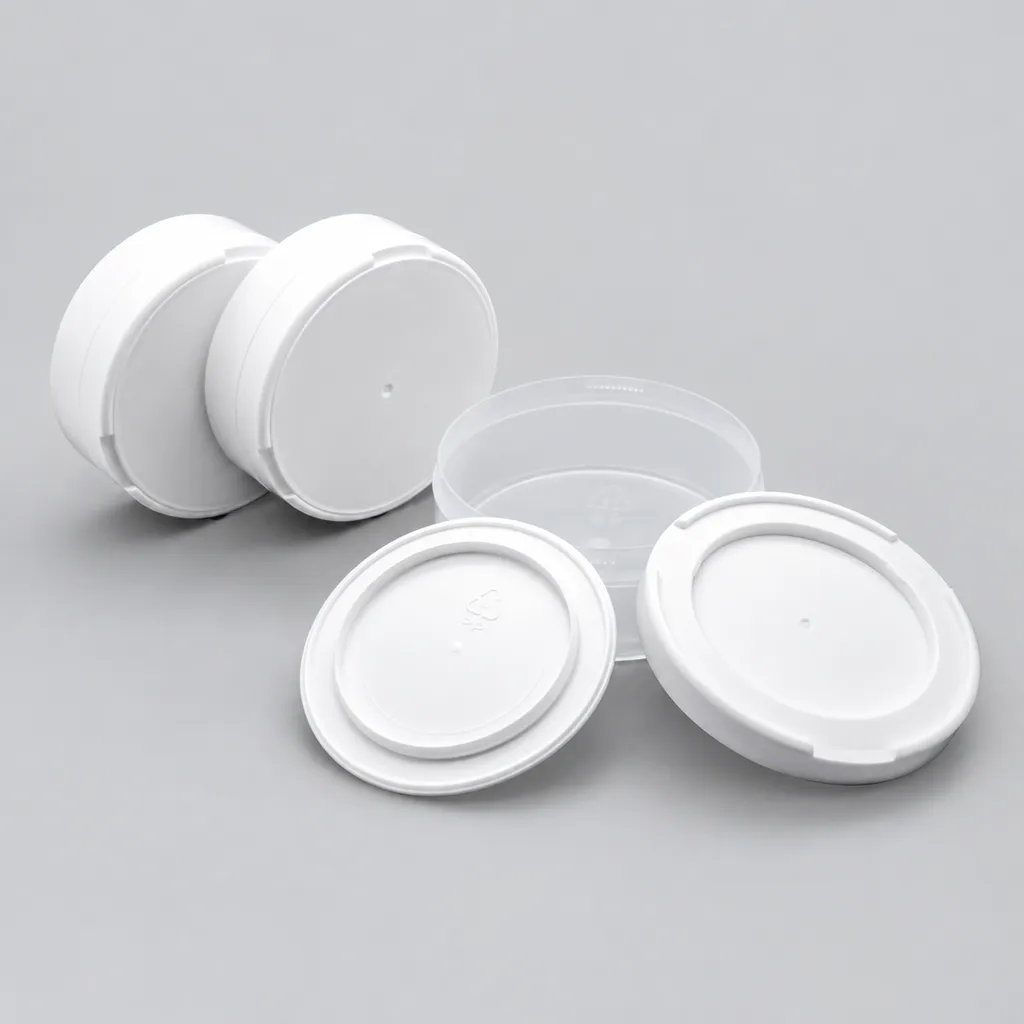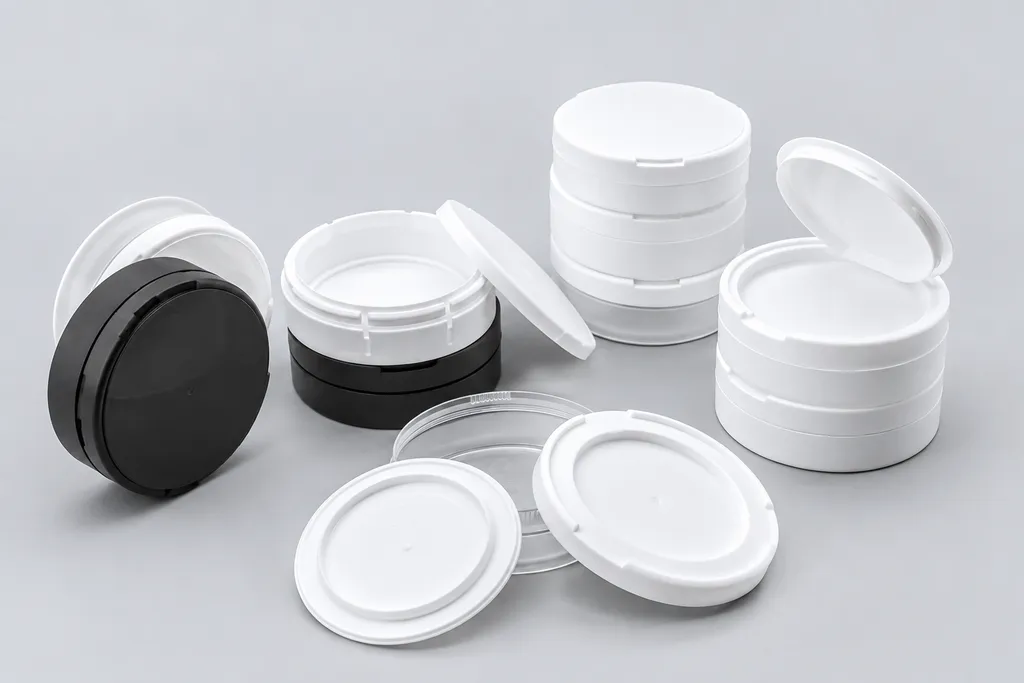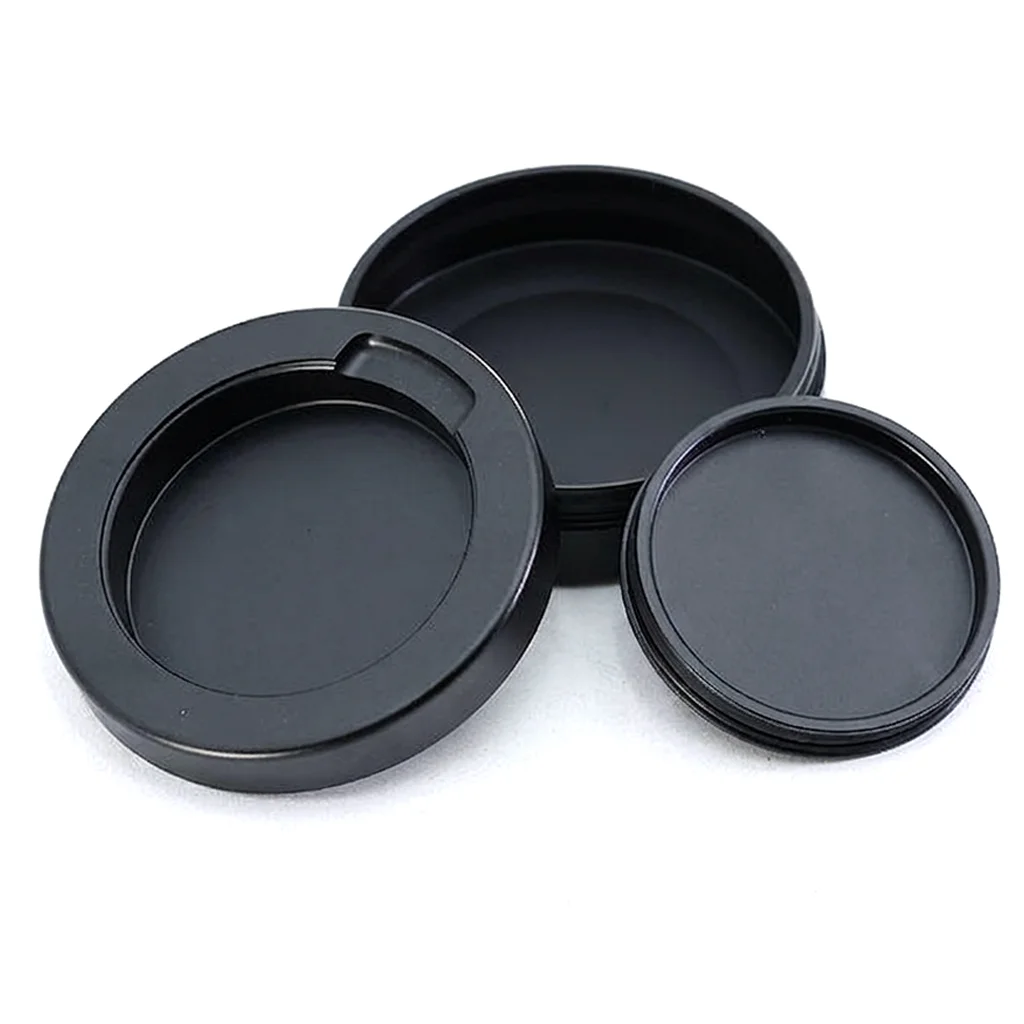
TL;DR: Moisture protection in nicotine pouch cans is a packaging-design problem, not a material mystery. Moisture moves through the packaging system — pouch, headspace, can environment, closure interface — and each layer is an engineering decision. Aluminum provides a near-absolute moisture barrier by material nature; food-grade PP provides a good barrier whose real-world performance depends on wall thickness and sealing design. Material sets the ceiling, but four manufacturing decisions — wall thickness, sealing design, cap design, and dimensional tolerance — decide how close a production can get to it.
Nicotine pouch performance is influenced by multiple components of the packaging system. While pouch materials affect the product itself, the can plays a separate role in protecting and managing the packaged environment — and that role is a container engineering decision, not an accident of material choice.
Moisture protection is a container performance dimension: how well the can — its material, walls, closure, and seals — limits moisture exchange between the outside environment and the pouches inside. This article focuses on nicotine pouch cans and container design factors, rather than pouch substrate materials.
One scope note for buyers comparing suppliers: MANKE manufactures empty cans and containers. If your current search is about pouch substrate — the filling material placed inside cans — that is a different supplier category outside MANKE’s product scope. Everything below covers the container side.
Why Does Moisture Protection Matter for Nicotine Pouch Cans?
Market observers note that moisture content in filled pouches has been rising as a category trend in oral nicotine products. Whatever the format, every brand owner faces the same packaging question: how much will the external environment interact with the packaged product between the filling line and the end customer?
That interaction happens over two long windows. The first is shipping: sea freight to North America or Europe commonly runs several weeks, through humidity swings in ports and containers. The second is shelf life: retail and warehouse storage adds months of exposure. Across both windows, the can is the only layer of the packaging system that the environment acts on directly.
This is why moisture protection belongs in procurement conversations early. A buyer who specifies material, closure, and sealing requirements before the first RFQ gets a configuration validated for their real conditions — instead of discovering a mismatch after the first production batch.
How Does Moisture Move Through a Packaging System?
A sealed can looks like a single object, but moisture control happens at four distinct points:
- The can wall. Moisture can permeate slowly through the wall material itself. This is a material property, and it is where PP and aluminum differ most fundamentally.
- The headspace. The air trapped inside the can around the pouches is the internal environment. Its moisture level at sealing depends on filling conditions — and it stays inside for the product’s whole life.
- The closure interface. The gap between the cap and the can rim is the most exchange-active point in the system. Every opening cycle exposes the headspace to outside air.
- The seal surface. Flatness and compression at the sealing surface determine how tight the closure actually is in production, across thousands of units.
A packaging system performs at the level of its weakest of these four points. An excellent wall material with a mediocre closure performs like a mediocre system — which is why manufacturing quality deserves as much attention as material selection.
PP vs Aluminum: Moisture Protection Differences
| Factor | Food-grade PP can | 6061 aluminum can |
|---|---|---|
| Moisture barrier (material level) | Good — design-dependent | Excellent — near-absolute by material nature |
| Wall thickness dependence | High — thicker walls reduce permeation | Low — barrier is inherent to the material |
| Sealing design importance | Critical — closure quality decides real performance | Important — closure consistency still matters |
| Weight | Light | Heavier, premium feel |
| Cost tier | Volume | Premium |
| Typical positioning | Launch brands, high-volume SKUs | Premium and moisture-sensitive formats |
The row that matters most for procurement: material sets the barrier ceiling, but sealing design decides how much of that ceiling a real production can reaches. Two cans of the same material, from different manufacturers or different production runs, can perform differently in the same shipping conditions.
For the full material-selection framework — cost stages, decoration options, and brand positioning — see the material comparison guide. This section covers the moisture-performance slice only.
When Do Brands Choose Plastic Cans?
PP is the volume product in this category — marketplace search data shows plastic can terms outnumber aluminum terms by roughly three to one. The reasons are structural:
- Cost structure. PP cans support lower unit costs at the MOQs launch brands actually order (standard stock SKUs start at 5,000–10,000 pcs).
- Design flexibility. Injection-molded PP takes color, transparency, and custom shapes easily, which matters for young brands building shelf identity.
- Adequate performance. For many applications, a well-designed PP can — proper wall thickness, good sealing surface, consistent closure — provides the moisture management the product needs.
The engineering caveat: with PP, “well-designed” is doing real work. Wall thickness, sealing surface quality, and tolerance consistency are exactly the variables a buyer should specify and validate with samples, because they are not visible in a quotation sheet.
When Does Aluminum Become the Better Choice?
Aluminum earns its premium tier in specific situations:
- Moisture-sensitive formats. When the filled product is more sensitive to moisture exchange, the material-level barrier difference stops being theoretical.
- Long cycles. Extended shipping routes or long warehouse dwell times multiply the exposure windows where barrier performance matters.
- Premium positioning. CNC-machined finishes, knurled textures, and metal weight signal a premium tier that plastic does not attempt to match — a positioning choice as much as an engineering one.
One honest limitation: aluminum is not automatically the “better” can. Closure design still matters, cost is real, and decoration options differ. The correct question is not “which material wins” but “which material matches this product’s moisture profile, this brand’s tier, and this budget” — which is a material selection question, not purely a performance one.
Which Manufacturing Decisions Affect Moisture Protection?
Four levers decide real-world container performance. They are the items worth writing into an RFQ:
- Wall thickness. For PP, thicker walls reduce permeation measurably. Thickness also affects rigidity and weight — a three-way tradeoff the manufacturer can optimize once the application is known.
- Sealing design. Interface flatness between cap and rim, plus consistent compression from the sealing surface, determine the closure’s real tightness. This is a tooling and process-quality variable.
- Cap design. Thread engagement depth and closure-force stability control how well the seal survives repeated opening — the moment the system is most exposed.
- Dimensional tolerance. Consistent tolerances keep sealing performance uniform across a production run. Among buyers who contact MANKE with custom dimension requests, tolerance implications on sealing and capacity are a recurring topic — dimensions that look equivalent on paper can behave differently once the closure geometry changes.
One related tradeoff: a child-resistant mechanism occupies internal volume, so a CR can of given external dimensions typically holds fewer pouches than its standard-lid equivalent, and the mechanism changes the sealing geometry. Capacity for a CR configuration should be validated with physical filled samples of the final design — not inferred from the standard-lid version of the same can.
Specify these seven inputs to your can manufacturer
| Input | What to provide |
|---|---|
| Material | PP or aluminum |
| Dimensions / capacity | Target can size and pouch count |
| Closure type | Standard, snap-on, flip-top, or child-resistant |
| Sealing requirements | Your shipping and storage conditions |
| Wall / structure | Thickness and rigidity expectations |
| Compliance | Target markets and required documentation (e.g. FDA food-contact for the US, EU 10/2011 and REACH for Europe) |
| Samples | Quantities for visual check and line testing |
Complete inputs collapse the quoting and sampling cycle: the manufacturer recommends a configuration against your actual conditions instead of exchanging five rounds of clarifications. For how an OEM/ODM program runs from specification through sampling to mass production, see MANKE’s private label packaging process.
Author
MANKE Product Engineering Team. This guide reflects MANKE’s work developing PP and aluminum nicotine pouch cans, child-resistant closures, and OEM sampling programs for regulated markets. MANKE manufactures empty cans and packaging only.
Sources & Claims
This article separates verified product information, industry context, and claims that require buyer-side verification.
- Marketplace search-behavior data (plastic-to-aluminum term ratio, premium finish signals) is used at the category level; no competitor or platform data is reproduced.
- The category-trend observation on filled-pouch moisture content derives from a single market-research source and is presented with that limitation, without brand references.
- CR capacity and sealing tradeoffs reflect engineering evaluation and archived project correspondence; capacity for any CR configuration requires physical validation with filled samples.
- Barrier performance in this article is described qualitatively because valid performance figures are configuration-specific: wall thickness, closure geometry, and production tolerances all shift the numbers, so a single published rate would mislead more than it informs. Published packaging specifications should be supported by validated testing data for the exact configuration being ordered — buyers requiring performance validation can request samples and evaluation for their specific design.
- Buyer patterns are anonymized and aggregated; no customer names or identifiable project details appear.
Related Reading
- Aluminum vs Plastic Snus Cans: Which Material Fits Your Brand? — the full material selection framework
- Are Nicotine Pouch Cans Recyclable? — material declarations, PPWR readiness, and recyclability claims
- Empty Snus Can Specifications: Sizes Guide — Ø70mm formats, tolerances, and customization limits
- Food-grade PP can collection · 6061 aluminum can collection