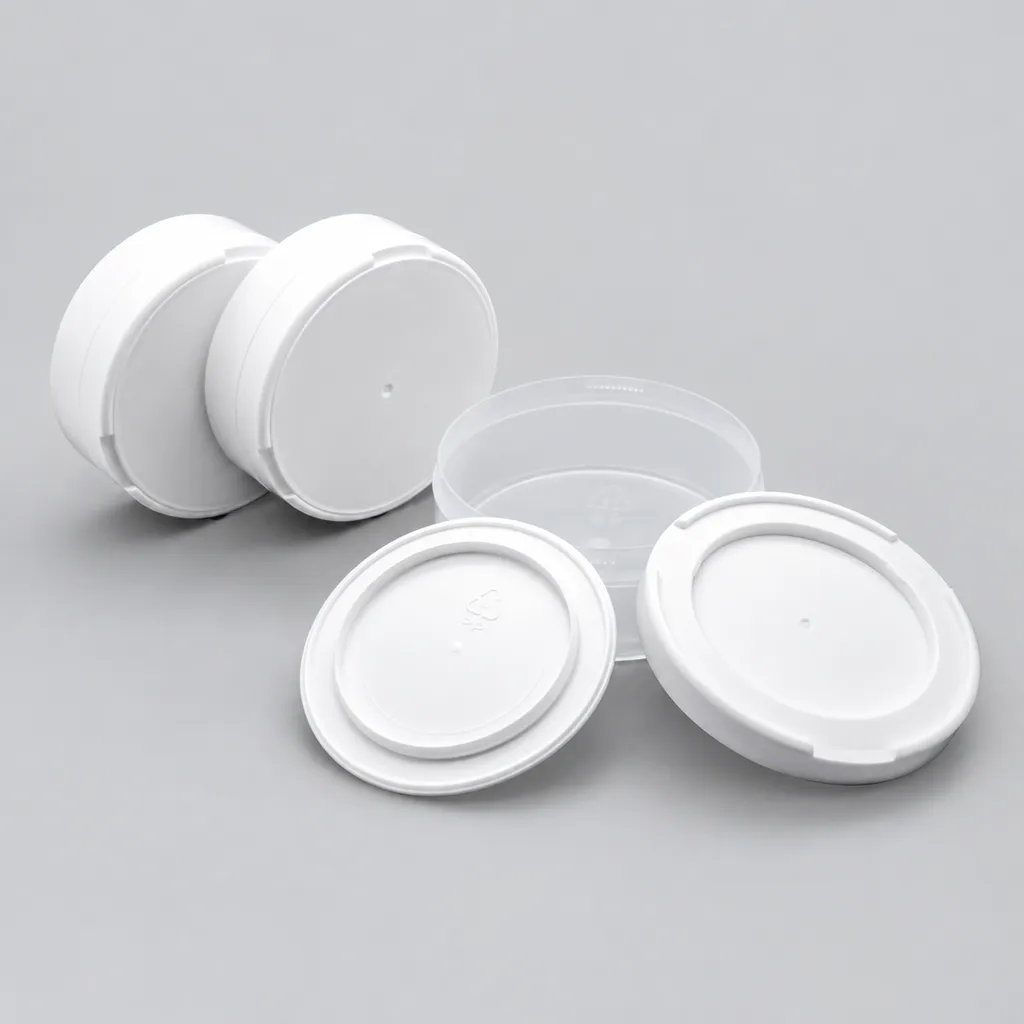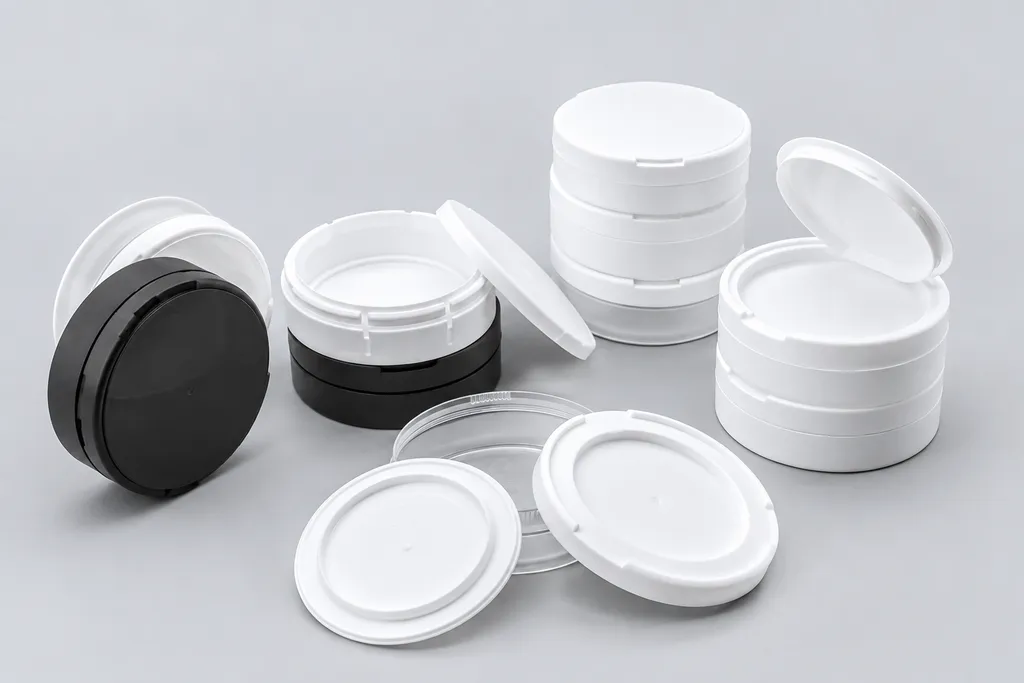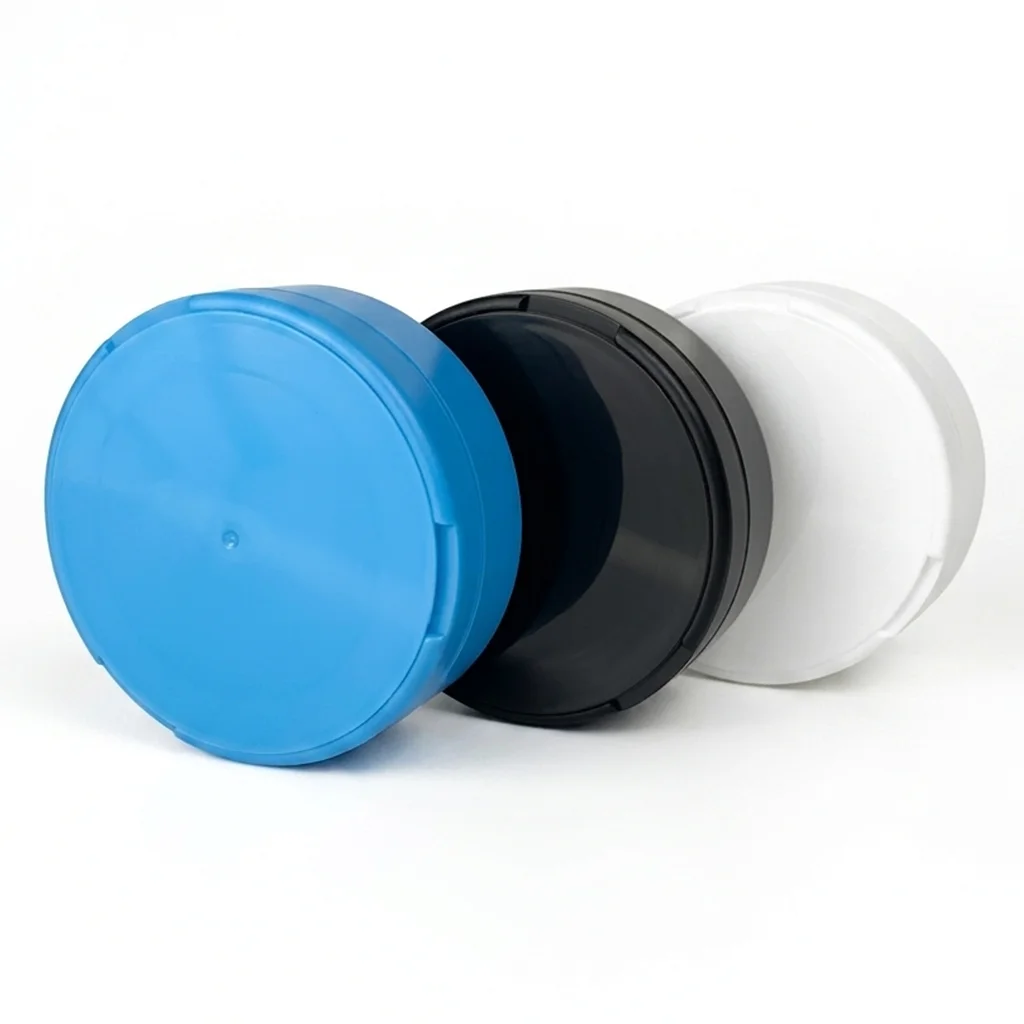
Are nicotine pouch cans recyclable? In principle, yes. The two standard materials — food-grade polypropylene (PP) for plastic cans and 6061 aluminum for premium metal cans — are both recyclable, and neither uses bonded material layers that block processing. In practice, whether a specific can actually gets recycled depends on three factors outside any manufacturer’s control: local sorting infrastructure, container size, and color.
That gap between “recyclable in principle” and “recycled in practice” is about to become a compliance question. The EU Packaging and Packaging Waste Regulation (PPWR) turns recyclability and recycled content into legal requirements for packaging placed on the EU market, with binding targets arriving from 2030. Brands selling into the EU — and the suppliers who manufacture their cans — will need documentation, not just intentions.
This guide answers the recyclability question at material level: what nicotine pouch cans are made of, how PP and aluminum actually behave in recycling streams, what PPWR changes for EU-bound packaging, and which documents to request from your can supplier before the rules tighten. MANKE manufactures empty packaging for licensed B2B buyers; recyclability guidance here covers the can only, not the pouch or its contents.
What Materials Are Nicotine Pouch Cans Made From?
Nearly all nicotine pouch cans are made from one of two materials: food-grade polypropylene (PP) plastic or 6061 aluminum. Both are single-material constructions — the recycling system’s preferred input — and both are used across MANKE’s catalog.
PP is an injection-molded thermoplastic chosen for moisture barrier performance, chemical inertness (no flavor or aroma migration), and the ability to form living hinges in snap-fit lids. MANKE’s PP cans are mono-material: the body and the closure are the same polymer family, so the assembled can can be processed as one resin stream rather than separated into components.
Aluminum cans — such as MANKE’s CNC-machined MK-SNUS-AL-CR child-resistant can — use 6061 alloy with an anodized surface finish. Anodizing is a thin, controlled oxide layer; it changes appearance and hardness without adding a foreign material layer.
| Attribute | PP plastic can | Aluminum can |
|---|---|---|
| Base material | Food-grade polypropylene (PP) | 6061 aluminum alloy |
| Recycling code | Resin identification code 5 | Metal — accepted by most scrap programs |
| Typical unit weight | ~7–14 g depending on structure | ~15–25 g (CNC-machined) |
| Manufacturing method | Injection molding | CNC machining + anodizing |
| Common structures | Snap-lid, snap-on, flip-top, child-resistant | Child-resistant precision closure |
| MANKE reference SKU | MK-SNUS-PP-SL (Ø70 × 25 mm, ~12 g assembled) | MK-SNUS-AL-CR (available in ISO 8317 and 16 CFR 1700.20 compliant configurations) |
MANKE produces both material families in-house. Browse the plastic snus can collection and the aluminum snus can collection for stock SKUs in each, the full snus can catalog across both, or the private label nicotine pouch packaging program for custom production runs.
Are PP Plastic Snus Cans Recyclable?
Yes — PP is a recyclable resin, and a mono-material PP can is exactly the kind of packaging recycling systems are designed to process. The practical obstacles are color, size, and local acceptance, not the material itself.
PP carries resin identification code 5 and is accepted by a growing number of municipal programs, particularly in the EU and Nordics, where extended producer responsibility schemes push more packaging into sorted streams. A mono-material design matters here: when the body and closure are the same polymer family, the entire can enters one recycling stream. Multi-material packaging — a different plastic for the lid, a metal insert, a glued label film — forces separation steps that many facilities skip.
One limitation is structural to the format, not the resin. A standard snus can is 70 mm in diameter and weighs roughly 12 grams, which sits below the size threshold of some optical sorting and screening equipment. Small-format items can literally fall through sorting screens at material recovery facilities, regardless of resin code.
Material transparency is part of the answer. MANKE molds PP cans from food-grade PP resin; the resin grade used across MANKE’s PP range (Y16SY) was tested by SGS against US FDA 21 CFR 177.1520 (report SHAAF24026147609, November 2024) — density 0.906 g/cm³ against a 0.880–0.913 limit, melting point 166.7 °C against a 160–180 °C limit, with all tested parameters passing. This is material-level compliance evidence: it documents what the plastic is, which is the same information recyclers and regulators ask for.
Are Aluminum Snus Cans Recyclable?
Yes — aluminum is one of the most valuable materials in the recycling system, and the anodized surface on a snus can does not prevent recycling.
Aluminum can be recycled repeatedly without quality degradation, and the high scrap value of aluminum creates a strong economic incentive for recovery — aluminum items are consistently among the most wanted materials in mixed-waste sorting. The anodized finish is a microscopic oxide layer measured in micrometers; in a re-melt furnace, anodized and bare aluminum behave identically.
The same small-format caveat applies as with PP. A 70 mm can may be below the detection threshold of some sorting equipment, and small metal items can be lost when facilities process glass. For brands, the practical takeaway is identical for both materials: the can’s recyclability is real, and its recovery rate depends on the infrastructure of the specific market and municipality — so check local acceptance before making recycling claims on consumer-facing packaging.
Why Doesn’t Every Recycling Program Accept Small Cans?
Recycling acceptance is decided by local sorting facilities, not by a material’s technical recyclability. Two identical cans — same resin, same structure — can face different outcomes in different postcodes.
Most modern material recovery facilities identify plastics with near-infrared (NIR) optical sorters, which read the light signature of each polymer. This is where color becomes decisive: carbon black pigment absorbs the infrared beam, so black PP items return no readable signature. The result is well documented across the industry — carbon black can reduce sorting accuracy and may increase the chance of rejection in some recycling systems, particularly at facilities running older optical equipment. NIR-detectable dark pigments exist and are gaining adoption, but they are not yet the default.
Size creates a second filter. Small rigid plastic items may be lost during mechanical sorting, because some facilities remove small-format objects before the optical sorting stage — a snus can and its loose lid can fall below the equipment’s effective detection threshold regardless of resin code.
For brands, the sourcing implications are concrete: favor mono-material construction, ask which pigment system a black can uses, and design for the strictest market in your distribution plan. Germany and Sweden operate among the most developed sorting infrastructures in the EU; acceptance there still varies by municipality. In the United States, acceptance rules differ not only state by state but city by city. A recycling claim that is true in one market can be misleading in another.
What Does EU PPWR Change for Nicotine Pouch Packaging?
PPWR turns recyclability from a marketing claim into a legal requirement — and it applies to every can placed on the EU market, regardless of how the product inside is classified.
The Packaging and Packaging Waste Regulation — Regulation (EU) 2025/40 — entered into force on 11 February 2025 and becomes applicable from 12 August 2026. Packaging placed on the market before that date may remain on the market. The obligations phase in over the following decade:
| Date | PPWR obligation |
|---|---|
| 12 August 2026 | General application: declarations of conformity, EPR producer registration, and packaging minimization rules begin |
| 1 January 2030 | Minimum post-consumer recycled content in plastic packaging (10–35% depending on packaging category) |
| 1 January 2030 | Design-for-recycling criteria: packaging graded A (≥95%), B (≥80%), or C (≥70%) by weight — packaging below grade C faces market restriction as the criteria phase in |
| 2035 | Packaging must be recycled at scale, not only designed for recycling |
| 2038 | Only recyclability grades A and B remain permitted |
Three details matter for sourcing decisions. First, only post-consumer recycled (PCR) content counts toward the targets — pre-consumer scrap does not. Second, which recycled-content band applies to a nicotine pouch can depends on its contact-sensitive classification under the regulation; confirm the classification with your compliance advisor rather than assuming. Third, extended producer responsibility fees will be eco-modulated by recyclability grade from around 2031 — packaging that sorts poorly will cost more to place on the market. Under PPWR, packaging that does not meet future recyclability performance criteria may face market restrictions as the requirements phase in, so the direction of travel is fixed even where implementing details are still being defined. Dates and thresholds above reflect the regulation as adopted; implementing acts may adjust details, so verify against the current legal text at the time of sourcing.
PPWR does not replace child-resistant requirements — CR certification under ISO 8317 or 16 CFR 1700.20 remains a separate obligation for regulated markets. The two regimes stack: a can may need to be simultaneously child-resistant, documented for food-contact material compliance, and graded for recyclability. MANKE’s CR can range (CR nicotine pouch cans) addresses the first layer; this article addresses the second and third. For the full CR requirement map, see the child-resistant packaging compliance guide. The regulation is tracked in detail at PPWR Atlas.
Can Recyclability Claims Be Printed on Nicotine Pouch Packaging?
A recyclable material does not automatically mean a recyclable claim is permitted on the finished package. Environmental claims are regulated separately from packaging law: the EU’s Unfair Commercial Practices framework and national green-claim rules in markets such as Germany, France, and the Nordics all require that recycling statements be specific, accurate, and supportable in the market where the product is sold. In the United States, FTC Green Guides set the equivalent expectation.
The practical rule for brands: before printing a recycling statement — the resin code symbol, a “widely recyclable” label, or a recycled-content percentage — verify the claim against the acceptance rules of each target market, and prefer specific statements (“made from PP, resin code 5”) over generic ones (“eco-friendly packaging”). A claim that is true in one market can be misleading in another, and the liability sits with the brand placing the product on the market, not with the can supplier. Suppliers can support the claim with material documentation; the claim itself is the brand’s compliance decision.
Need EU-ready packaging documentation? Request a sample set with material specifications, compliance documents, and production details. Request Packaging Documents →
How MANKE Documents Material Compliance
MANKE’s role in recyclability is material transparency: documenting what each can is made of and demonstrating that the material meets food-contact rules in target markets.
Every PP can order ships with a material documentation set covering US and EU requirements:
- FDA food-contact material compliance (21 CFR 177.1520 for PP) — supplier material declarations plus the SGS resin test report described above.
- EU 10/2011 food-contact documentation for plastic materials, REACH compliance documentation for substances of concern.
- Product-level specifications from the canonical registry — material, dimensions, weight, capacity, and closure type for each SKU — so the document set matches the exact configuration ordered.
Two boundaries keep these claims honest. The FDA and EU documentation is material-level: it certifies that the PP resin complies with food-contact rules, and MANKE does not phrase it as “FDA certified cans.” And MANKE does not currently claim recycled-content (PCR) production or third-party recyclability certification for any SKU — where this guide discusses PCR content and recyclability grades, it describes what brands should verify across their supply chain, not a MANKE product feature. The full certification set is maintained on the MANKE certifications page.
How to Raise Recyclability Requirements When Sourcing Cans
Treat recyclability as a specification, not a slogan. Five questions surface whether a can supplier can support EU-market compliance through 2030:
- What is the exact material? Request the resin grade (for PP) or alloy (for aluminum) in writing — recyclability grading and food-contact documentation both start from this.
- Is the can mono-material? Body and closure in the same polymer family keeps the can in one recycling stream and simplifies design-for-recycling grading.
- Which pigment system does a black can use? Carbon black defeats NIR sorting; NIR-detectable alternatives exist. The answer determines whether a black SKU can survive EU sorting infrastructure.
- What recycled-content documentation can the supplier provide? Even where current production is virgin material, PPWR makes PCR traceability relevant from 2030 — a supplier’s methodology documentation matters as much as today’s material.
- Which market documents ship with the order? Confirm the material compliance set (FDA, EU 10/2011, REACH) is included, and that specifications match the tested configuration.
The fastest way to evaluate both materials is physical: request samples of a PP can and an aluminum can, check closure feel, weight, and finish against your brand requirements, then decide with the documentation set in hand. MANKE ships sample sets of 5–10 units, typically within 7–10 days of specification confirmation. Browse the full snus can catalog to shortlist structures first, and use the aluminum vs plastic material comparison to narrow the field.
Author
MANKE Product Engineering Team
MANKE specializes in compliance-focused packaging manufacturing for nicotine pouch and related regulated-market applications.
Sources & Claims
This article separates verified product information, industry context, and claims that require buyer-side verification. It does not:
- Claim that MANKE cans hold a recyclability certification or a design-for-recycling grade under PPWR
- Claim that MANKE offers recycled-content (PCR) production — availability is a buyer verification question, not a current MANKE product feature
- Phrase material-level test reports as product-level or facility-level FDA certification
- Guarantee that any specific can will be accepted by any specific local recycling program
- Replace legal advice on PPWR classification, which depends on product-specific factors
PPWR dates and thresholds reflect Regulation (EU) 2025/40 as adopted; implementing acts may adjust details. Verify against the current legal text before making compliance decisions.