When procurement or compliance teams search for child-resistant packaging testing, they are usually trying to answer three questions at once: Is testing required for my market? What does the process actually involve? And what will drive the overall cost and timeline?
Child-resistant packaging testing is a panel-based evaluation that determines whether a package can prevent children under 5 from opening it while remaining accessible to adults. The two most widely referenced standards are ISO 8317 (international) and 16 CFR 1700.20 (United States). Testing involves child panels, adult panels, statistical analysis, and a formal test report.
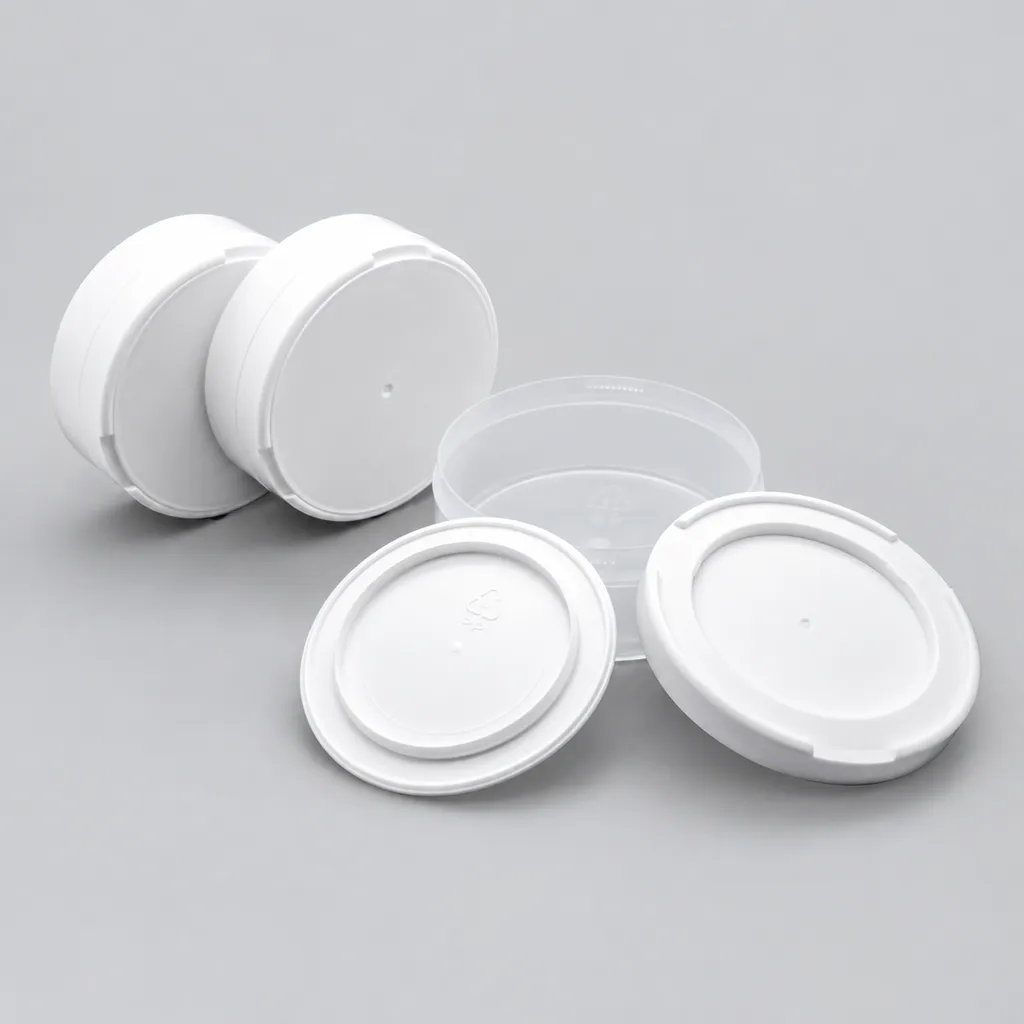
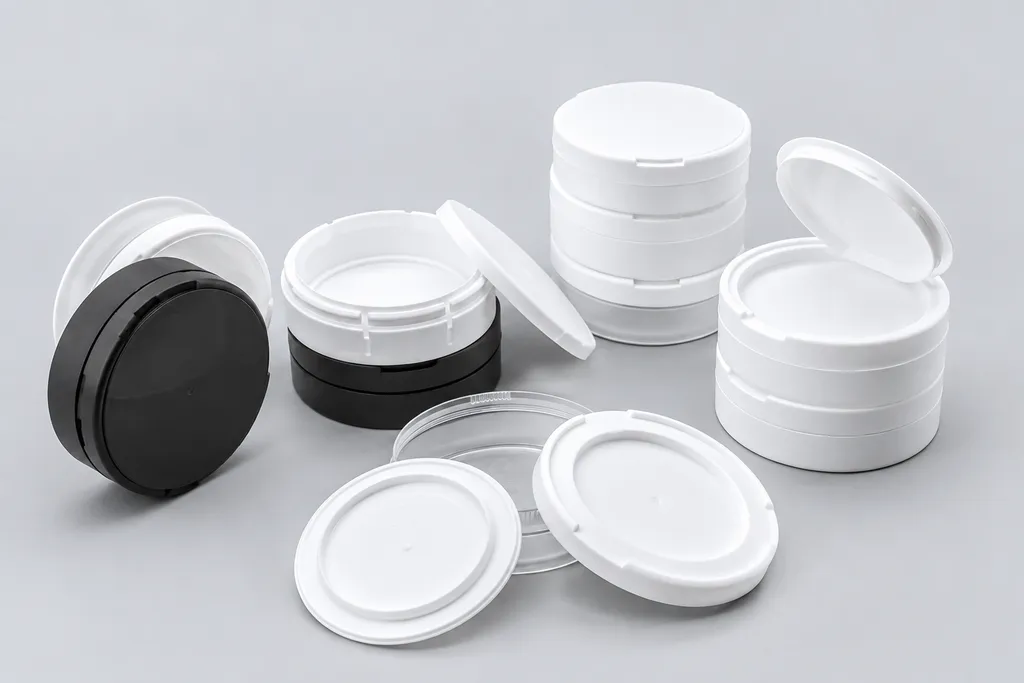
MANKE manufactures child-resistant snus cans and supports brands with pre-certified CR platforms, third-party test documentation, and design guidance to reduce the risk of failed or repeated testing cycles.
When Is Child-Resistant Packaging Testing Required?
CR testing is not universal. Whether it is required depends on the product category, the target market, and sometimes the retailer or distributor.
United States
In the US, the Consumer Product Safety Commission (CPSC) regulates child-resistant packaging under the Poison Prevention Packaging Act. Nicotine-containing products, including nicotine pouches, generally require packaging tested to 16 CFR 1700.20 by a CPSC-accepted laboratory. Major retailers typically require this documentation as a condition of onboarding.
European Union and United Kingdom
The EU references ISO 8317 / EN 862 for reclosable child-resistant packaging. The UK uses BS EN ISO 8317. National implementations vary, so brands should confirm whether their target member state requires additional registration or notification.
Canada
Canada requires CAN/CSA Z76.1 for reclosable child-resistant packaging for nicotine pouch products. Health Canada and the Canada Border Services Agency may review compliant test reports during customs clearance and retailer onboarding.
UAE and GCC
The UAE and broader GCC region require GSO ISO 8317:2015 for nicotine products. This certification is administered through GSO-accredited laboratories and is a common cause of customs delays when missing.
Australia
Australia references AS 1928 / ISO 8317 through the Therapeutic Goods Administration (TGA) framework. Senior-friendly packaging is particularly emphasized.
Even When Not Legally Mandated
Some retailers and distributors require CR documentation even in markets where it is not strictly required by law. Brands launching through regulated retail channels should confirm buyer-specific requirements before finalizing packaging.
ISO 8317 vs. 16 CFR 1700.20: What Each Test Covers
The two most common CR standards are often mentioned together, but they are not interchangeable.
| Dimension | ISO 8317 | 16 CFR 1700.20 |
|---|---|---|
| Scope | International standard for reclosable CR packaging | US regulation under PPPA |
| Common markets | EU, UK, Australia, GCC (with local recognition) | United States |
| Child panel | Typically 100 children aged 42–51 months | Typically 200 children aged 42–51 months |
| Adult panel | Required; tests senior-friendly access | Required; tests adult access |
| Lab accreditation | ISO 17025 accredited lab | CPSC-accepted laboratory |
| Documentation | Test report with pass/fail and statistical data | Test report with CPSC protocol conformance |
A package tested to ISO 8317 should not automatically be assumed to satisfy 16 CFR 1700.20 requirements, and vice versa. Brands selling globally typically need both, although a well-designed CR closure can often be tested against both standards in a coordinated campaign.
The Complete Child-Resistant Packaging Testing Process
CR testing is not a single event. It is a structured process that begins before any samples are sent to the lab.
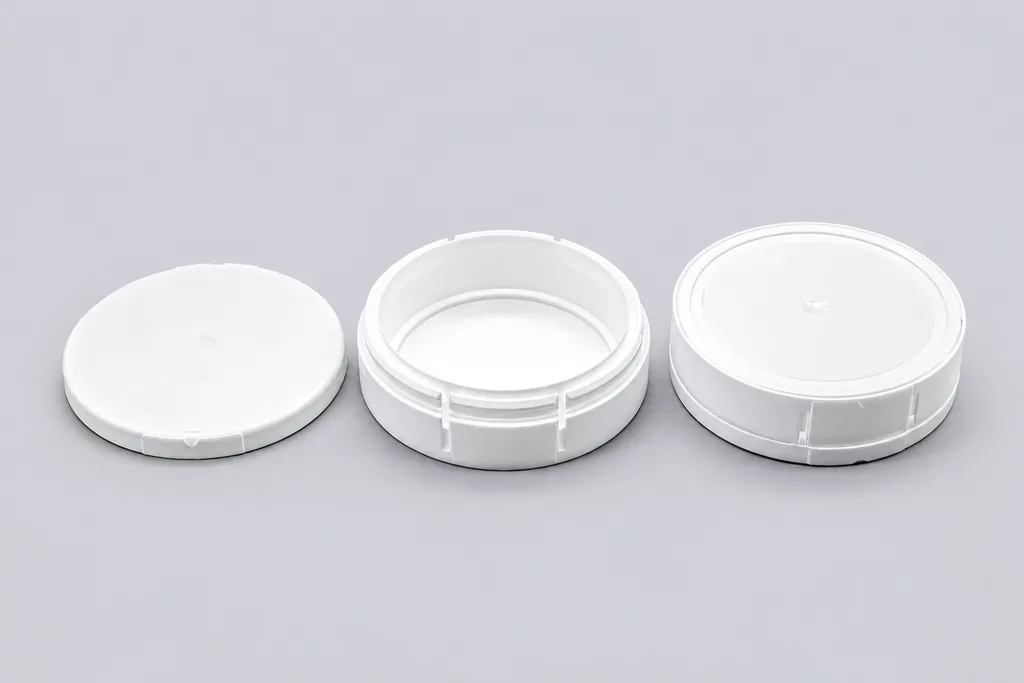
Child-resistant packaging testing evaluates the complete package system, including the closure mechanism, container design, and opening interaction. In many nicotine pouch packaging formats, the closure design — such as push-and-turn mechanisms and thread geometry — plays an important role in the overall testing process.
1. Design Review and Standard Selection
The first step is to confirm which standard applies to each target market and whether the proposed packaging configuration can reasonably pass. This review examines closure geometry, torque profile, wall thickness, material behavior, and opening force.
2. Sample Preparation
Samples must match the final production configuration as closely as possible. Changes between the tested sample and the production unit can invalidate the test report. MANKE provides production-aligned samples for buyer evaluation before third-party testing.
3. Child-Panel Testing
A panel of children aged 42–51 months is given a fixed time to open the package. The acceptance criterion varies by standard but generally requires a high percentage of children to fail.
4. Adult-Panel Testing
Adults, often including seniors, must be able to open the package within a reasonable time. A package that is too difficult for adults can fail even if it is child-resistant.
5. Statistical Analysis
The laboratory analyzes the results to determine whether the package meets the acceptance criteria. This analysis may include statistical outputs such as an F-value, depending on the lab and protocol.
6. Final Test Report
The report documents the standard, sample identification, test conditions, panel results, statistical analysis, and final pass/fail conclusion. This report is what customs officials, retailers, and distributors typically request.
7. Documentation Review
Procurement teams should review the full report, not just a one-page certificate. For help understanding statistical sections, see our guide to F-value reports in child-resistant packaging.
What Affects Child-Resistant Packaging Testing Cost?
Testing cost is driven by project-specific factors. The following elements typically affect the overall effort and expense.
1. Testing Standard Selection
Testing to a single standard requires fewer resources than testing to multiple standards. However, brands selling into both the US and EU commonly need ISO 8317 and 16 CFR 1700.20 documentation.
2. Packaging Configuration Complexity
A standard push-and-turn closure on a catalog SKU is simpler to test than a custom closure with unique geometry. More complex designs may require additional design review and sample iteration.
3. Number of SKUs or Configurations
Each distinct packaging configuration may need its own evaluation. A brand with multiple can sizes, lid types, or material variants should not assume that one test report automatically covers all of them.
4. Material Choice
Plastic and aluminum behave differently under testing. Wall thickness, thread geometry, and surface finish can all influence closure performance. Material selection should be locked before testing begins.
5. Sample Quantity and Preparation
Testing standards require a specific number of samples. If samples are not production-representative or need to be remade, timelines and preparation effort increase.
6. Design Changes or Retesting
If the packaging design changes after the initial test, the applicability of the original report must be reassessed. Significant changes may require retesting.
7. Laboratory and Market Requirements
Some markets require testing at specifically accredited laboratories. US testing must be conducted at a CPSC-accepted lab. GCC markets require GSO-recognized accreditation.
8. Documentation Depth
Some buyers need only a pass/fail certificate. Others require the full test report, material compliance certificates, batch COAs, and customs documentation. The depth of documentation affects preparation effort.
When Does Child-Resistant Packaging Need Retesting?
Retesting is one of the most common sources of unexpected cost and delay. A CR test report is valid for the exact configuration that was tested. Changes to that configuration can affect child-resistant performance.
Common retesting triggers include:
- Material change: switching from one plastic grade to another, or from plastic to aluminum
- Wall thickness change: thinner or thicker walls can alter torque and deflection
- Closure geometry change: thread pitch, depth, or mechanism changes
- Torque profile change: opening force may shift outside the tested range
- Surface treatment or decoration: coatings or textures that affect grip
- Mold or production line change: different tooling can produce different tolerances
- Standard update: when the applicable regulation or test method is revised
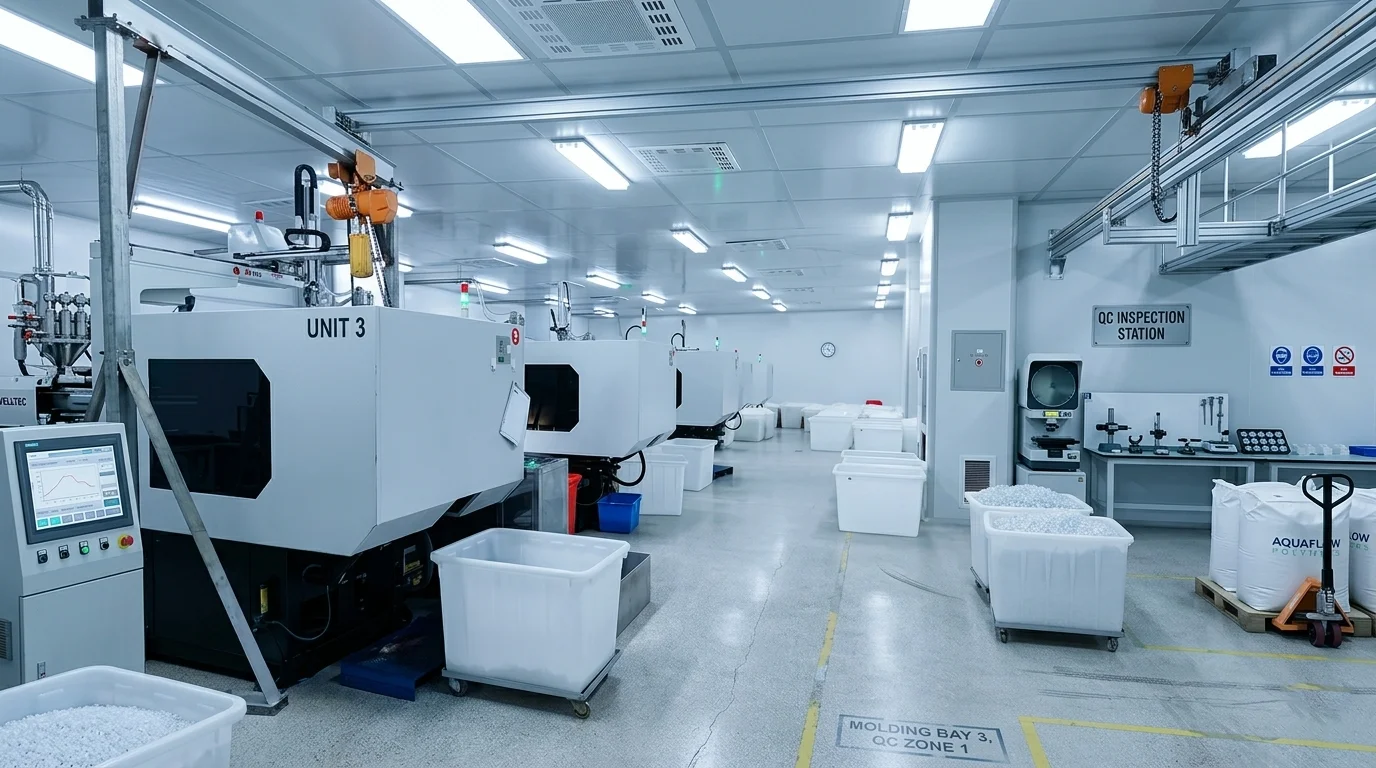
Because MANKE owns and operates its manufacturing facility, design and production changes are controlled and documented. This makes it easier to determine whether an existing test report remains applicable or whether retesting is necessary.
What Documents Should You Request After Testing?
After testing is complete, procurement teams should request a complete documentation package. At minimum, this should include:
- The full test report, not just a summary certificate
- The applicable standard and version
- Sample identification and batch information
- Laboratory credentials and accreditation
- Child and adult panel data
- Statistical analysis and final conclusion
- Material compliance statements, such as FDA food-contact readiness or EU 10/2011 documentation
- Batch COA for production shipments
For a deeper explanation of the statistical section, including F-values, see our guide to F-value reports in child-resistant packaging.
MANKE’s Approach to CR Packaging Testing
MANKE supports brands through the CR testing process with pre-certified platforms and manufacturing control.
MK-SNUS-PP-CR — a food-grade PP child-resistant snus can tested to ISO 8317.
The same platform also has documentation associated with 16 CFR 1700.20.
MK-SNUS-AL-CR — an aluminum CR can platform with corresponding ISO 8317 test documentation.
The aluminum CR platform also has documentation associated with 16 CFR 1700.20.
Because MANKE controls the manufacturing environment, production samples can be aligned with the tested design. This reduces the risk of configuration drift that leads to retesting.
What Buyers Should Ask Before CR Testing Begins
Before starting a CR testing project, buyers should clarify:
- Which markets require CR documentation?
- Which standard applies to each market?
- Which exact SKU or configuration will be tested?
- Is the tested configuration the same as the production configuration?
- Which laboratory will perform the testing?
- What documentation depth does the buyer need?
- What happens if the design changes after testing?
- Can the supplier provide production-aligned samples?
These questions help avoid the most common CR testing delays: testing the wrong configuration, using the wrong standard, or discovering after launch that the production unit no longer matches the tested design.
Final Takeaway
Child-resistant packaging testing is a market-entry requirement, not a optional quality check. The process involves design review, sample preparation, child and adult panel testing, statistical analysis, and formal documentation.
Key factors that affect testing effort include the standard selected, packaging complexity, number of configurations, material choice, sample preparation, retesting needs, laboratory requirements, and documentation depth.
MANKE provides pre-certified CR packaging platforms and third-party test documentation to help brands reduce testing risk and avoid unnecessary retesting.
Applicable test documentation can be reviewed as part of the compliance process for the relevant SKU.
Request a CR Compliance Review
If your brand is preparing child-resistant packaging for the US, EU, UK, Canada, or GCC markets, MANKE can help you identify the applicable testing standard, match your configuration to a pre-certified SKU, and prepare the documentation you need.
Request a CR Compliance Review →
Browse Pre-Certified CR Snus Cans →
Author
MANKE Product Engineering Team
MANKE specializes in compliance-focused packaging manufacturing for nicotine pouch and related regulated-market applications.
Sources & Claims
This article separates verified product information, industry context, and claims that require buyer-side verification. It intentionally does not claim specific testing costs, laboratory fees, or guaranteed timelines, because MANKE’s current documentation does not establish those figures.
It also does not:
- Publish a specific testing price or price range
- Claim that one test report automatically covers multiple SKUs
- Describe MANKE packaging as FDA certified or FDA approved
- Treat F-value as a certification score
- Guarantee test outcomes or certification success
- Claim equivalence between ISO 8317 and GCC/UAE requirements