When procurement or compliance teams source f-value reports for child resistant packaging, they are usually reviewing the statistical detail behind a CR panel test—not a standalone certificate.
An F-value report is the documentation that accompanies child-resistant packaging testing under standards such as ISO 8317 and 16 CFR 1700.20. It provides information about how the child and adult test groups are statistically separated, but it does not replace the pass/fail conclusion issued by the testing laboratory.
For buyers sourcing nicotine pouch or oral nicotine packaging, understanding the difference between a pass/fail certificate and supporting statistical documentation can make supplier due diligence, design comparison, and compliance reviews more straightforward.
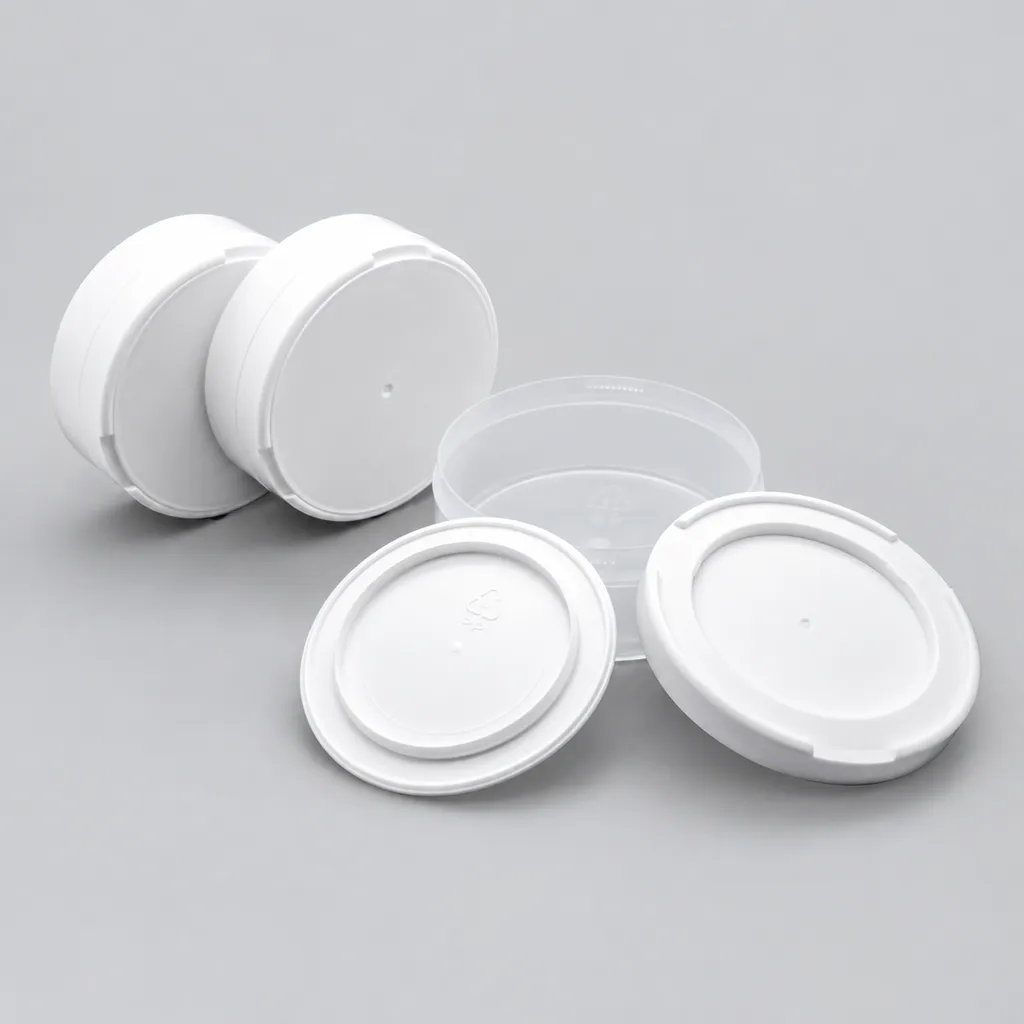
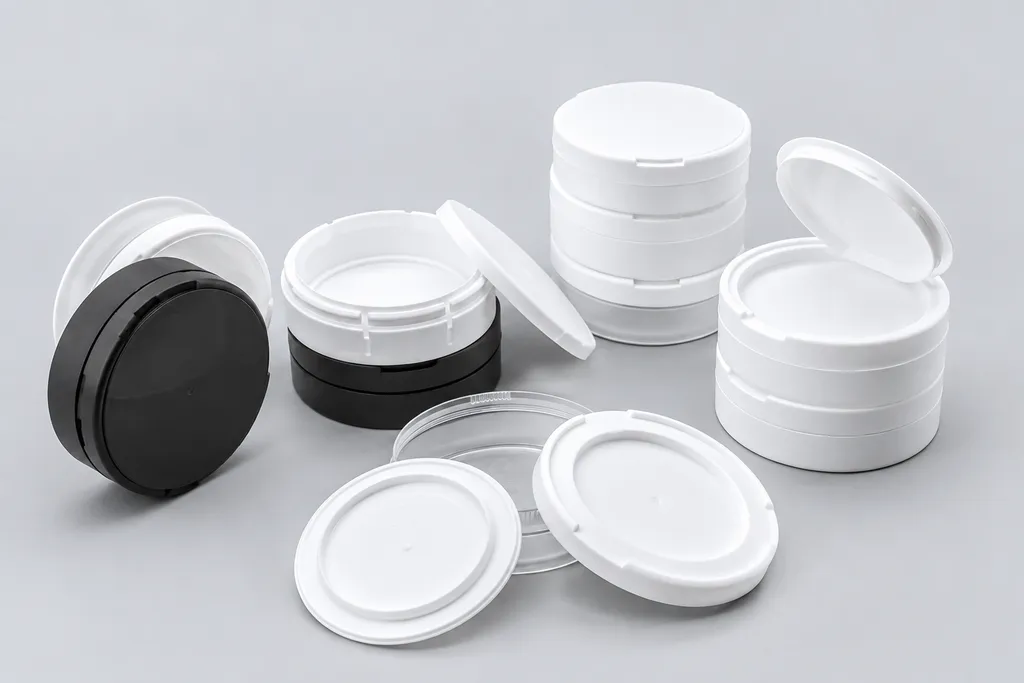
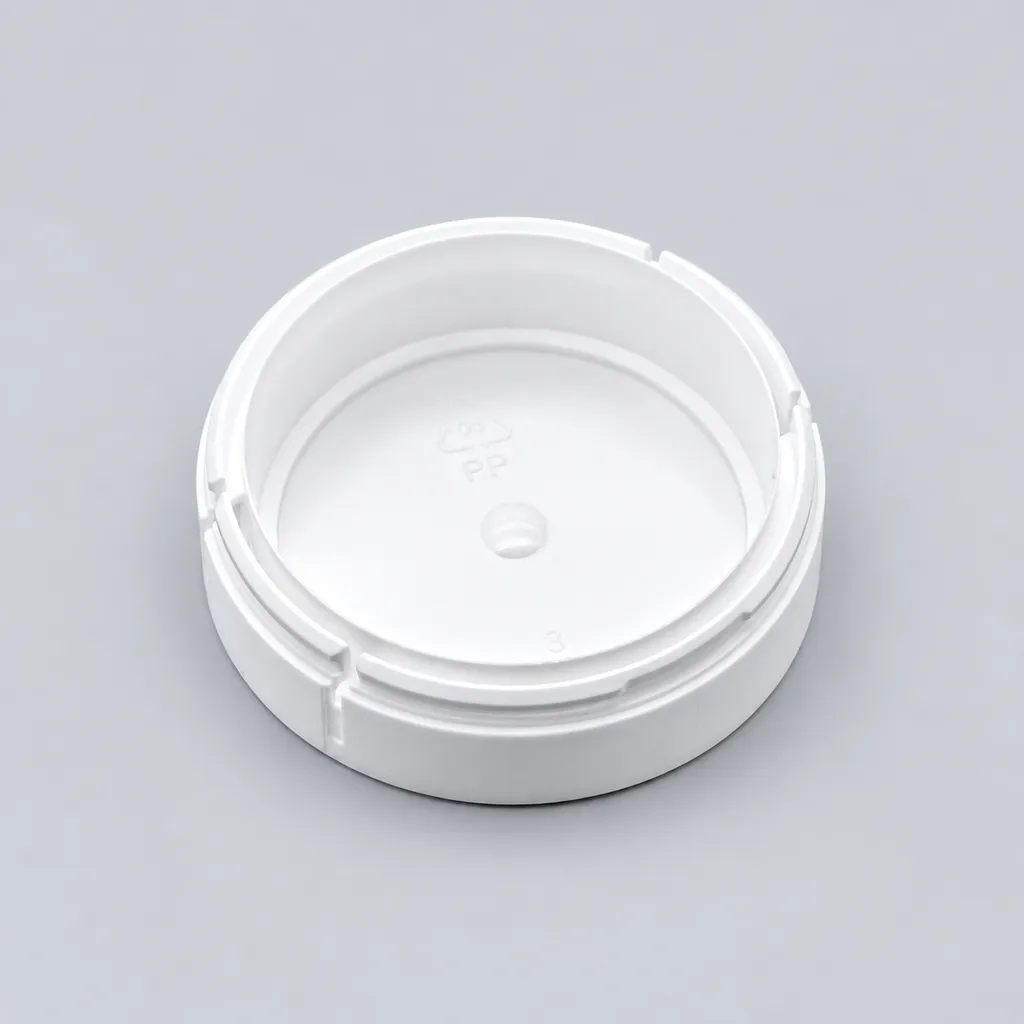
MANKE manufactures child-resistant snus cans and maintains third-party test documentation for selected CR platforms against ISO 8317 and 16 CFR 1700.20. The applicable documentation can be reviewed as part of the compliance process for the relevant SKU.
What Is an F-Value Report?
Child-resistant packaging is evaluated through testing involving both children and adults.
The child panel is intended to determine whether children are prevented from opening the package within the specified test conditions. The adult panel evaluates whether the package can still be opened by the intended adult population.
The resulting observations can then be analyzed statistically.
An F-value is one of the statistical outputs that may be associated with this type of analysis. It provides information about the degree of statistical separation between the tested groups.
A typical supporting test report may contain information such as:
- The applicable test standard and version
- Sample identification
- Laboratory information
- Test date
- Panel characteristics
- Opening attempts and outcomes
- Child and adult test results
- Statistical analysis and related outputs
- The laboratory’s final conclusion
The important distinction is that the F-value should not be treated as a standalone certification score. The complete test methodology, panel results, statistical analysis, and final pass/fail conclusion all need to be considered together.
Evidence note: The explanation of F-value and panel testing is based on general testing methodology and is not a claim that MANKE’s own test reports contain a particular F-value or F-value range.
Why Do Buyers Request F-Value Documentation?
A pass/fail certificate and the underlying test documentation answer different questions.
A certificate primarily communicates whether the tested package met the applicable requirements. The underlying report provides more detail about how the test was performed and how the result was established.
Procurement and compliance teams may request the full documentation for several reasons.
1. Distributor Due Diligence
A distributor or retailer may want to review the underlying testing rather than rely only on a summarized certificate.
The full report can provide information about the tested sample, laboratory, methodology, panel results, and final conclusion.
2. Design Comparison
When evaluating different CR closure designs, buyers may need more technical information than a simple pass/fail result provides.
Statistical information can support a technical comparison when the packages have been tested under comparable conditions.
A statistical value should not, however, be interpreted in isolation or reduced to a simple rule such as “higher is always better.”
3. Compliance Documentation
Nicotine pouch and oral nicotine packaging can be sold across markets with different regulatory and testing requirements.
Maintaining a complete documentation package makes it easier for procurement, compliance, and technical teams to review the relevant evidence for a specific packaging SKU.
Important: Buyer requests for underlying testing data are presented here as procurement guidance and industry practice, rather than as a claim that every distributor or regulator requires an F-value report.
F-Value vs. Pass/Fail: What’s the Difference?
The simplest way to understand the relationship is to treat the two as complementary rather than interchangeable.
| Dimension | Pass/Fail Certificate | Supporting F-Value Documentation |
|---|---|---|
| Primary purpose | Communicates the test conclusion | Provides statistical and testing detail |
| Main question | Did the tested package meet the applicable requirements? | What does the statistical analysis show about the tested results? |
| Typical use | Compliance and supplier documentation | Technical and procurement review |
| Relationship | Does not replace the full report | Does not replace the final compliance conclusion |
A certificate without supporting technical information may provide limited visibility into the underlying test.
Conversely, statistical information by itself does not establish that a package complies with a particular market requirement.
For procurement purposes, the complete test report and the final test conclusion should be reviewed together.
How F-Value Reports Relate to ISO 8317 and 16 CFR 1700.20
Two standards commonly encountered in CR packaging discussions are ISO 8317 and 16 CFR 1700.20.
ISO 8317
ISO 8317 is an international standard covering requirements and test methods for reclosable child-resistant packaging.
16 CFR 1700.20
16 CFR 1700.20 specifies testing requirements for child-resistant packaging under the U.S. Poison Prevention Packaging Act framework.
The two standards serve different regulatory systems and should not automatically be treated as interchangeable simply because both involve child-resistant packaging testing.
The applicable standard should always be confirmed against the target market, product, packaging configuration, and regulatory requirements.
Is There One Universal F-Value Threshold?
Buyers should be cautious about claims that there is a single universal F-value threshold applicable to every CR package.
The interpretation of statistical results depends on the applicable testing methodology, sample characteristics, test conditions, and the laboratory’s analysis.
For this reason, reviewing the complete report and final conclusion is more useful than evaluating an isolated statistical number.
What Should Procurement Teams Review?
When reviewing child-resistant packaging test documentation, procurement teams should check at least the following items.
1. Test Standard
Confirm which standard was used.
Examples include:
- ISO 8317
- 16 CFR 1700.20
- Other market-specific requirements where applicable
2. Sample Identification
The tested sample should be clearly identified.
This is particularly important when a supplier offers several packaging platforms or custom configurations.
The report should allow the buyer to determine whether the tested configuration corresponds to the product being purchased.
3. Laboratory Information
Review the testing laboratory and the applicable laboratory credentials or accreditation information.
Third-party testing can provide stronger independent evidence than an unsupported in-house declaration.
4. Panel Data
Check the relevant child and adult panel information, including the applicable population, sample size, and test conditions.
5. Statistical Analysis
Where statistical information is included, review it in the context of the complete test methodology rather than treating an individual number as a standalone safety or compliance score.
6. Test Date
Confirm when the testing was performed.
If the packaging design, material, closure mechanism, or other critical characteristics have subsequently changed, the buyer should determine whether the existing report remains applicable to the current configuration.
MANKE’s Approach to CR Packaging Documentation
MANKE manufactures child-resistant snus cans for regulated-market applications.
The CR packaging platform includes both food-grade PP and aluminum options.
MK-SNUS-PP-CR
Configuration: Ø70 mm × 20 mm
Closure: Push-and-turn
Testing: ISO 8317
Evidence ID: EVD-2026-000010
The MK-SNUS-PP-CR platform also has test documentation associated with 16 CFR 1700.20.
Evidence ID: EVD-2026-000011
MK-SNUS-AL-CR
MANKE also maintains corresponding third-party test documentation for the aluminum CR platform against ISO 8317.
Evidence ID: EVD-2026-000010-AL
The aluminum CR platform also has corresponding documentation associated with 16 CFR 1700.20.
Evidence ID: EVD-2026-000011-AL
The important point for buyers is to match the test evidence to the exact packaging configuration being purchased.
A test document for one SKU should not automatically be treated as evidence for another SKU unless the applicability has been established.
How MANKE Supports a CR Packaging Project
For a new CR packaging project, a practical workflow is:
- Confirm the target market and applicable packaging requirements.
- Identify the required CR testing standard or standards.
- Match the required configuration to the available tested SKU.
- Review the applicable third-party test documentation.
- Produce samples for buyer evaluation where required.
- Confirm any design or material changes before production.
- Maintain the relevant documentation for the production configuration.
MANKE’s manufacturing capability also allows production samples to be aligned with the tested packaging configuration.
Changes to dimensions, materials, closure geometry, or other critical characteristics should be evaluated carefully because the applicability of existing test evidence depends on the tested configuration.
MANKE owns and operates its manufacturing facility, providing direct control over the production environment.
What Buyers Should Ask a CR Packaging Supplier
Before placing an order, a buyer can use the following questions:
- Which CR standard was used for testing?
- Which exact SKU or configuration does the report cover?
- Is the report from a third-party laboratory?
- Can the full test report be reviewed?
- Does the tested configuration match the package being ordered?
- Have the material, dimensions, or closure design changed since testing?
- What documentation is available for the target market?
- Can samples be produced for evaluation before mass production?
These questions help distinguish a supplier that can provide traceable test documentation from one that only provides a generic CR claim.
Final Takeaway
An F-value should be understood as part of the statistical evidence associated with CR panel testing, not as a replacement for a pass/fail certificate.
For procurement teams, the most useful approach is to review the complete documentation:
Test standard → tested SKU → panel methodology → results → statistical analysis → final conclusion
For nicotine pouch packaging projects, this also means checking that the documentation corresponds to the exact CR can configuration being purchased.
MANKE provides third-party CR test documentation for selected packaging platforms, including the MK-SNUS-PP-CR and MK-SNUS-AL-CR configurations.
The applicable test documentation can be reviewed as part of the compliance process for the relevant SKU.
Sources & Claims
This article separates verified product information, industry context, and claims that require buyer-side verification. It intentionally does not claim that MANKE’s child-resistant test reports state a specific F-value, because the underlying test documentation does not establish that figure.
It also does not:
- Publish a specific F-value number
- Claim that a higher F-value means a safer package
- Treat F-value as a certification score
- Claim that one report automatically covers multiple SKUs
- Describe MANKE packaging as FDA certified or FDA approved
- Claim equivalence between ISO 8317 and GCC/UAE requirements
- State a specific CR testing cost
- Claim that every production batch receives a new test report
Related Reading
- Child-Resistant Packaging Testing: Process, Requirements, and What Affects Cost — the complete testing workflow, from design review to final report, including what drives retesting.
- What Is a Child-Resistant Nicotine Pouch Can? — the foundational definition: how CR closures work and which standards apply.
Request a CR Compliance Review
If your brand is preparing child-resistant packaging for the U.S., Canada, EU, or GCC markets, MANKE can help identify the applicable CR packaging configuration, available test documentation, and sample requirements.
Request a CR Compliance Review →
Author
MANKE Product Engineering Team
MANKE specializes in compliance-focused packaging manufacturing for nicotine pouch and related regulated-market applications.