Brands launching a private label nicotine pouch line usually ask the same opening question: who do we work with for packaging, and what does the path from first sample to full production actually look like? The path is more predictable than most buyers expect. Private label nicotine pouch packaging follows a fixed sequence — define the can requirements, validate with samples, place a pilot order at the manufacturer’s MOQ, then scale into custom tooling and repeat production. Each step has known timelines, known documents, and known decision points.
Entity boundary, stated up front: MANKE manufactures empty nicotine pouch cans and packaging solutions. We do not manufacture nicotine products. If your search for a “nicotine pouch manufacturer” brought you here, the difference matters — this guide covers the packaging side, and the final section explains how the two supplier categories fit together.
The guidance below follows the sequence most packaging programs actually run. Sampling comes first because buyers need to validate fit, finish, and closure performance before committing to production, and supplier discovery happens the same way product search does — “snus factory” and “certified manufacturer” appended to can terms. This article structures that journey end to end.
How Does Private Label Nicotine Pouch Packaging Work?
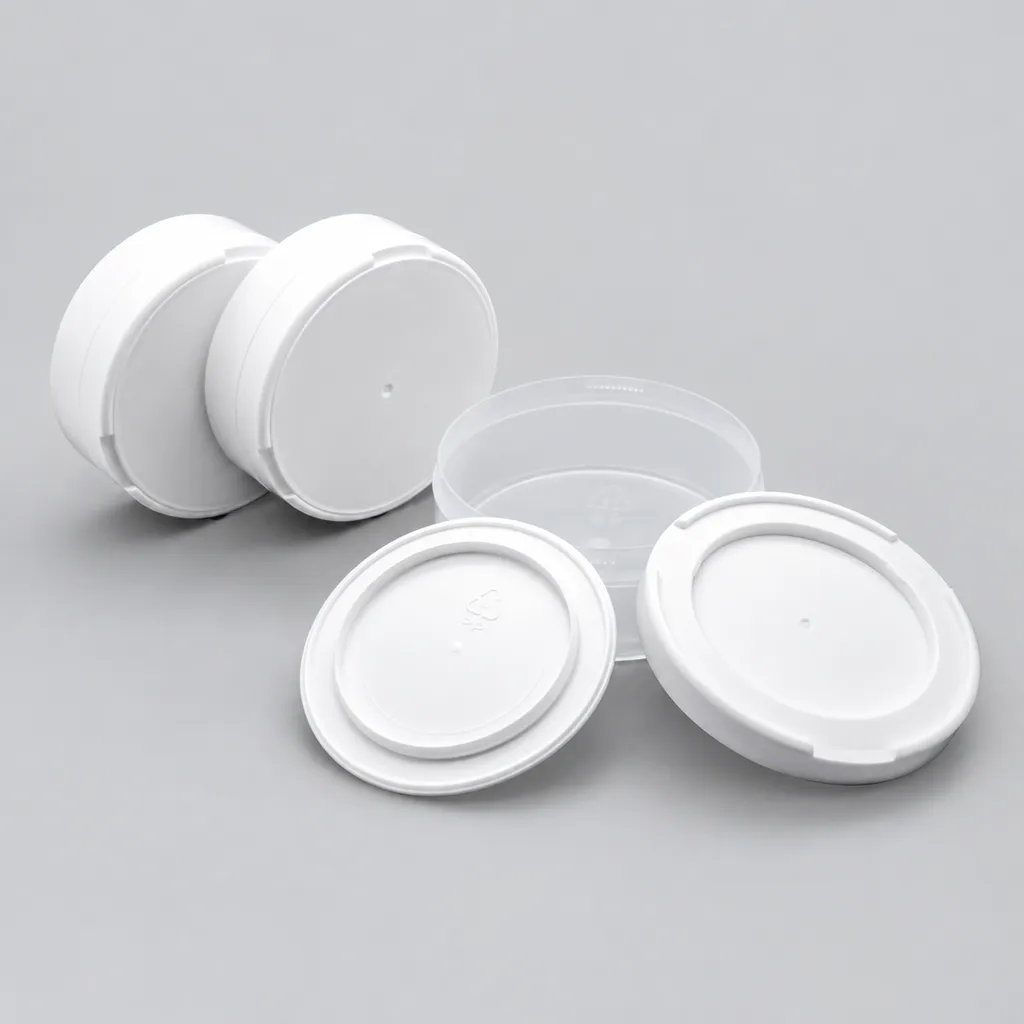
Private label nicotine pouch packaging is supplier-manufactured packaging — the empty can, the closure, and the printed branding — that a nicotine pouch brand sells under its own label. The brand owns the product, artwork, and market; the packaging manufacturer owns the container, the tooling, and the production process behind it.
Functionally, the arrangement works as a clean handoff: the brand owns the product, the artwork, and the market; the packaging manufacturer owns the can, the closure, and the production process behind them. Container production is a specialized layer of the oral nicotine supply chain, and brands of all sizes — from first-launch startups to the largest category players — source cans from dedicated packaging manufacturers rather than producing them in-house.
The journey has five stages:
- Requirements definition — can format, closure, material, color, and the compliance documents your target markets demand.
- Sampling — physical validation before any tooling or volume commitment.
- Pilot production — a first order at the manufacturer’s MOQ, typically 10,000 units per SKU, used to test the market with production-quality packaging.
- Scale — repeat orders, volume pricing tiers, and freight planning.
- Differentiation — optional custom molds, proprietary structures, and full brand-specific tooling once volume justifies the investment.
The private label packaging program at MANKE follows exactly this path, and most established packaging suppliers structure their programs similarly. What separates suppliers is not the shape of the journey but how verifiable each stage is — which the supplier section below covers.
What Should Brands Prepare Before Ordering Custom Packaging?
Five inputs turn a slow, back-and-forth quoting process into a fast one. Suppliers quote in 24 hours or less when these arrive complete:
| Prepare | What to specify | Why it matters |
|---|---|---|
| Can format | Diameter × height (the standard is Ø70 × 25 mm), pouch capacity target | Determines mold compatibility and filling-line fit |
| Closure type | Snap-lid, snap-on, flip-top, or child-resistant | Drives unit cost, seal performance, and market eligibility |
| Material and color | Food-grade PP (standard) or anodized aluminum; Pantone reference | Affects MOQ tiers, lead time, and shelf positioning |
| Artwork and print | Logo files, print method (screen, foil, heat-transfer), label placement | Print specifications determine decoration cost per unit — see the custom decoration options guide for method trade-offs |
| Target markets | US, EU, GCC, or multi-market | Determines which compliance documents and CR standards apply |
Customization is a baseline expectation in this category, not a premium option — buyers across our channels arrive expecting logo, color, and closure choices as standard. The practical advice is to lock the can format and closure first, because artwork and compliance flow from those two decisions. Brands planning a full launch alongside packaging can cross-reference the broader brand launch timeline to sequence the two tracks.
How Do You Choose the Right Nicotine Pouch Can Style and Material?
Start from market and brand position, then work inward to closure mechanics — and let food-grade PP be the default unless premium positioning genuinely justifies aluminum.
Among buyers who contact MANKE, one of the most consistent early questions is which can style fits their product, so the decision logic deserves its own step:
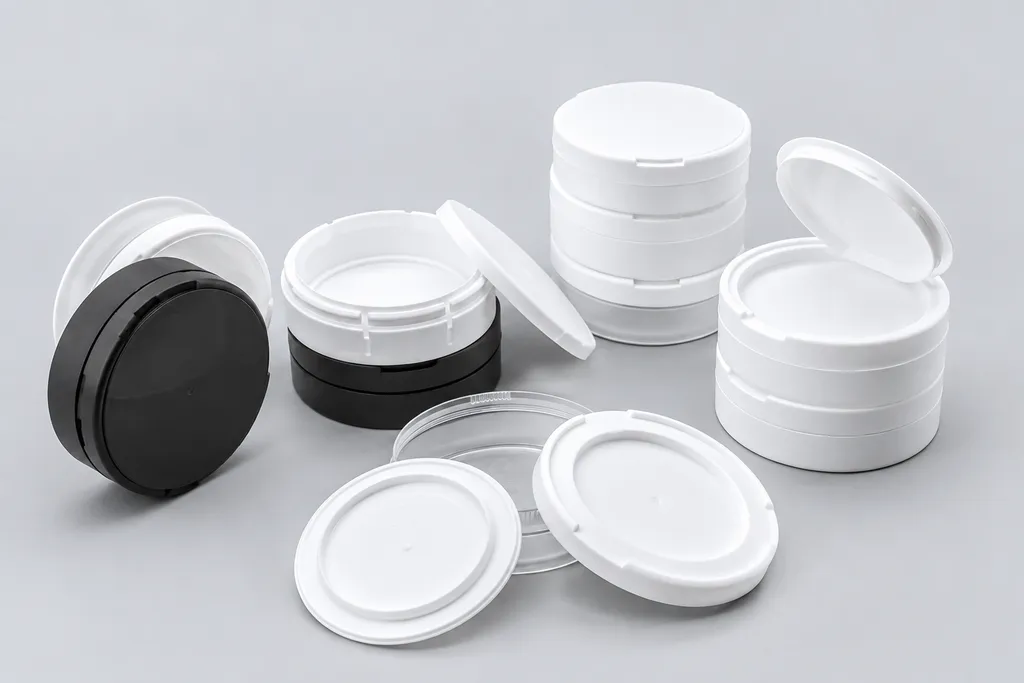
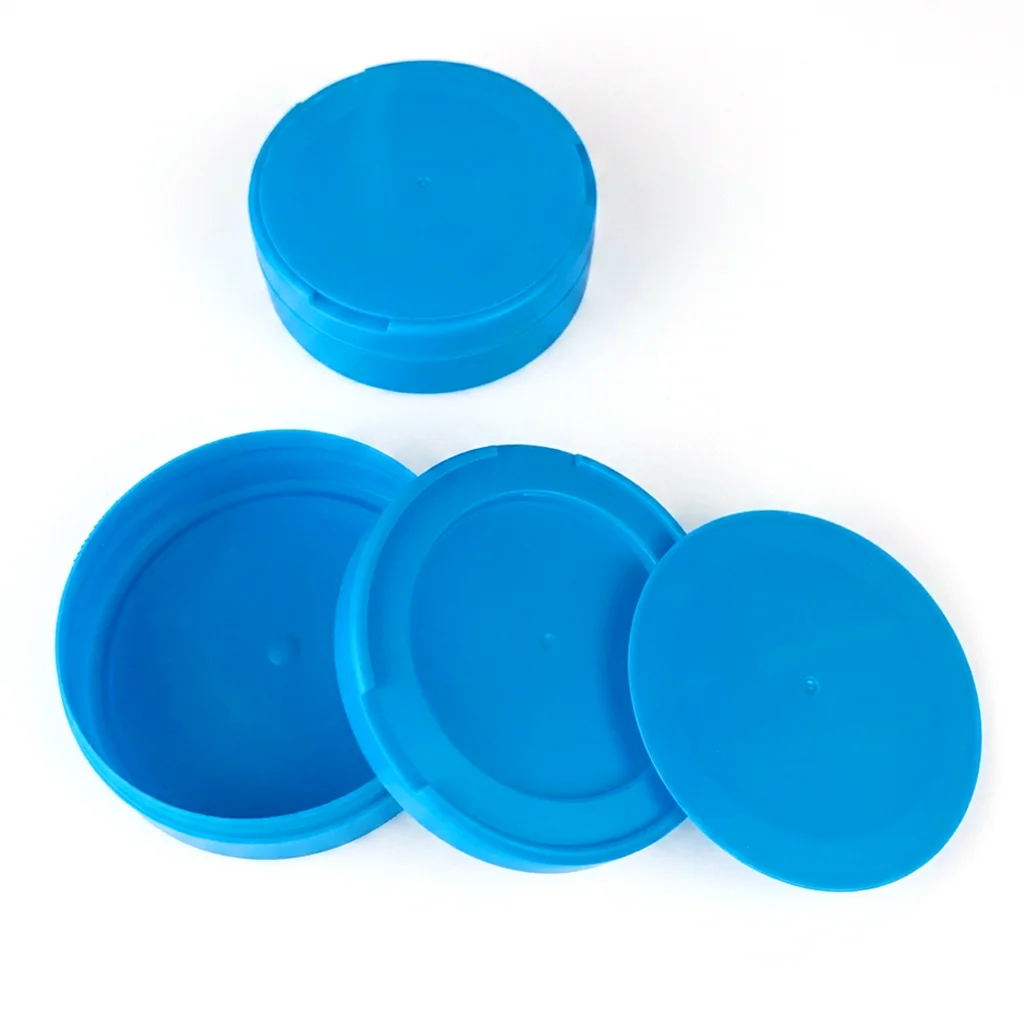
- Snap-lid is the entry point: the lowest unit cost, a reliable press-fit seal for long sea freight (optional silicone gasket), and a clean upgrade path to push-and-turn child-resistant later without changing suppliers.
- Snap-on and flip-top trade a small cost increase for consumer convenience, and both support living-hinge designs that open and close thousands of times.
- Child-resistant is not a style preference but a requirement that depends on your target market and retail channel — if your target market or retailer requirements call for child-resistant packaging, specify CR from the start rather than retrofitting. The child-resistant packaging compliance guide maps which standards apply where, and the CR nicotine pouch can collection shows the certified stock range.
On material, food-grade PP covers most private label programs: lightweight (roughly 7–14 g per can), color-flexible from stock, and compatible with every closure type. Anodized aluminum earns its premium for brands competing on tactile feel and shelf presence, at higher unit cost, higher weight, and longer lead times. The full trade-off table lives in the material comparison guide.
How Does the Sample Process Work?
The sample process has two tiers, and knowing which tier you need saves a week. Two to five units serve visual and tactile evaluation — weight, closure feel, surface finish. Two hundred to three hundred units serve filling-line testing, where the can runs on your actual production or co-packing equipment and seal performance is verified under real conditions — a step that matters when line compatibility is unproven.
Unbranded stock samples can ship within about 48 hours of a request. Branded samples with your artwork typically take 7–10 days. Samples themselves are free; the buyer covers courier shipping. In many packaging programs, sampling is the first practical step rather than the RFQ form, which is why the journey in this guide starts here.
The specification to verify during line testing is the closure torque profile against your capping equipment — a mismatch found at sample stage costs a courier fee, while the same mismatch found at production costs a container.
From Sample Approval to MOQ Production
Standard MOQ for custom nicotine pouch cans is 10,000 units per SKU, and the healthiest way to read that number is as a pilot batch, not a barrier. For early-stage brands, the most common question is whether a smaller first run is possible; the practical path is samples for validation, then the 10,000-unit pilot as the market test, then scale.
For larger programs, the pattern inverts. Enterprise-scale programs often start with a stock SKU for speed and move to custom tooling once volume is established — capacity evidence, compliance documentation, and factory audit readiness weigh more heavily in that evaluation than unit price alone. Brands shortlisting a pilot platform can start from the stock range in the full can catalog.
| Stage | Quantity | Typical timeline | Purpose |
|---|---|---|---|
| Visual samples | 2–5 units | ~48 hours unbranded, 7–10 days branded | Evaluate look, weight, closure feel |
| Line-testing samples | 200–300 units | ~7–10 days | Verify filling-line compatibility and seal |
| Pilot order | 10,000 units (MOQ) | Production lead time from artwork approval | Market validation with production-quality packaging |
| Scale order | 50,000+ units | Volume pricing tiers apply | Established demand, cost optimization |
| Custom tooling | Program-specific | Mold development ~2–3 weeks added | Proprietary structure or differentiated design |
Typical indicative pricing for standard PP cans at pilot volumes is around $0.10–$0.11 per unit, with lower tiers at scale — indicative figures only, since configuration, decoration, and shipping terms move the number.
Need a pilot quotation? Send your can size, material, and target market, and MANKE returns a quote and sampling plan within 24 hours. Request a Pilot Quote →
How Much Time and Investment Does Custom Packaging Require?
Custom molds and tooling are a project-specific investment, not a catalog price. In one private-label packaging project evaluated by MANKE, the tooling quotation for a custom child-resistant can came to approximately $14,000 — a figure that illustrates the upfront investment some custom platforms require. The final amount depends on mold structure, cavity count, material, surface finish, and expected production volume; simple platforms run well below that number, and complex multi-cavity tooling runs higher. The context that converts sticker shock into a decision: tooling is a one-time cost amortized across every unit the mold produces — at multi-million-unit annual volumes, the amortized tooling cost falls to a fraction of a cent per can — and for volume programs the per-unit saving versus decorated stock cans often returns the investment within a bounded number of production runs. Stock SKUs with custom printing exist precisely so brands can launch without that commitment.
Total timeline follows the same structure. From artwork approval, standard production plus sea freight to North America or Europe typically totals 6–8 weeks door to door; express courier compresses sampling cycles to days. Freight deserves its own line in the budget — indicative ranges run from roughly $750 for LCL courier-scale loads to five figures for full DDP containers, depending on destination and incoterm. A supplier that quotes indicative freight ranges early saves a re-approval cycle later. Exact mold and freight numbers belong in an RFQ, where configuration is known.
What Makes a Reliable Nicotine Pouch Packaging Supplier?
Reliability in this category is verifiable, not rhetorical. Four things can be checked before the first order:
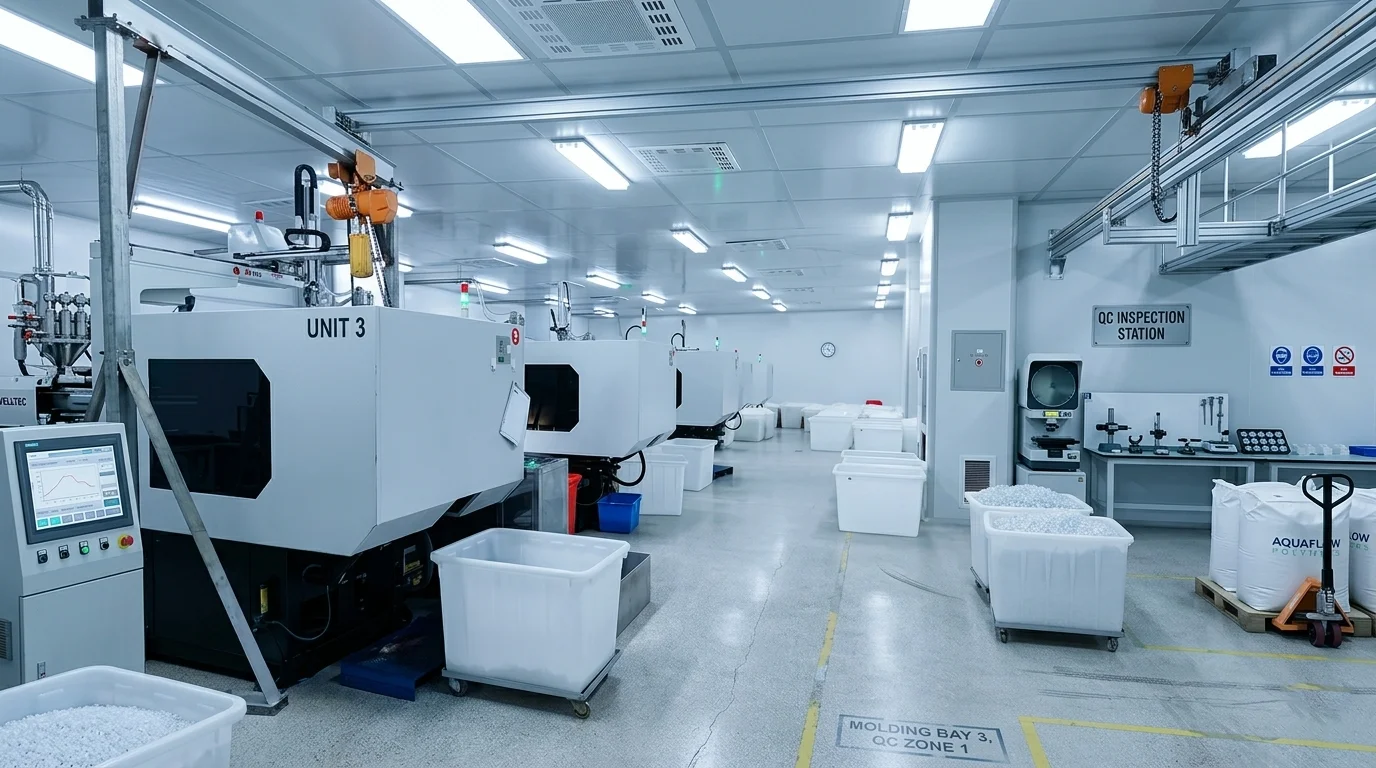
- Factory control. Does the supplier own the production facility, or broker the production? Owned factories make consistency and audit access structurally simpler to verify.
- Certification depth. For child-resistant markets, ISO 8317 and 16 CFR 1700.20 test reports should exist for the exact can configuration being ordered — not a sibling SKU.
- Material documentation. FDA food-contact material documentation for US-bound plastic cans, EU 10/2011 and REACH documentation for Europe.
- Workflow transparency. A defined stock-to-custom path, stated MOQ policy, and sample process a buyer can follow without a sales call.
The deeper evaluation criteria — audit questions, documentation checklists, red flags — are covered in the dedicated supplier evaluation criteria guide, which pairs with this one.
Packaging Manufacturer vs Nicotine Pouch Manufacturer
These are different supplier categories, and confusing them is the most common wrong turn in this journey.
The short version: a nicotine pouch manufacturer produces the product itself — formulation, pouch filling, finished goods. A packaging manufacturer produces what the product ships in — empty cans, closures, customization, and compliance documentation. Most brands source the two roles separately, and knowing which one you need determines which RFQ to send.
A nicotine pouch manufacturer produces the product: formulation, pouch filling, and finished goods. A packaging manufacturer produces what the product ships in: empty cans, closures, customization, and the compliance documentation behind the container. Some companies integrate both; many brands source them separately.
The distinction changes what you ask for. If you need the product made, you are looking for a pouch manufacturer or a co-packer, and the search term “nicotine pouch manufacturer” fits. If the product is defined and you need packaging — the scenario this guide covers — you are looking for a packaging manufacturer, and the evaluation shifts to can platforms, tooling economics, and documentation. Brands comparing program structures before committing either way can also review white label program options to see how the two categories interact in practice.
Ready to evaluate packaging options? Send your target can format, market, and estimated volume. MANKE will recommend suitable PP, aluminum, or child-resistant configurations and ship a sample set for evaluation. Request Free Samples →
Author
MANKE Product Engineering Team
MANKE specializes in compliance-focused packaging manufacturing for nicotine pouch and related regulated-market applications.
Sources & Claims
This article separates verified product information, industry context, and claims that require buyer-side verification. It does not:
- Guarantee specific mold, unit, or freight prices — all figures are indicative and belong in an RFQ. The $14,000 tooling figure is one project quotation, not a price list
- Claim that buyer pattern observations (stock-to-custom paths, MOQ questions) apply to every buyer — these describe recurring patterns among buyers who contact MANKE
- Describe MANKE as a nicotine pouch or nicotine product manufacturer in any capacity
- Publish identifiable customer details, volumes, or order values
- Present container outsourcing as an industry-structure observation rather than MANKE-specific client evidence — no brand relationships are implied or claimed
- Promise that any specific configuration will pass child-resistant panel testing